
The Church of Sant’Ulderico and the Town Square
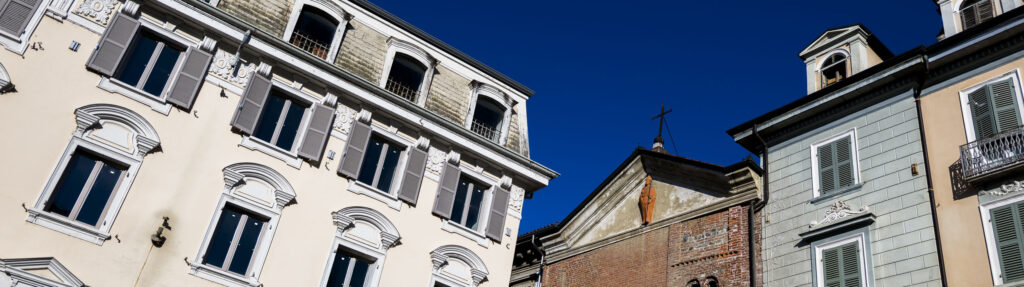
More than a thousand years ago, in an inn in Ivrea, a Germanic bishop named Ulderico raised a child from the dead. The child grew up, became a priest, and built a church on the site of the inn. Over the centuries it filled with art — including the statue dedicated to the Saint that graces the façade, high above.
Palace of the Municipal Council
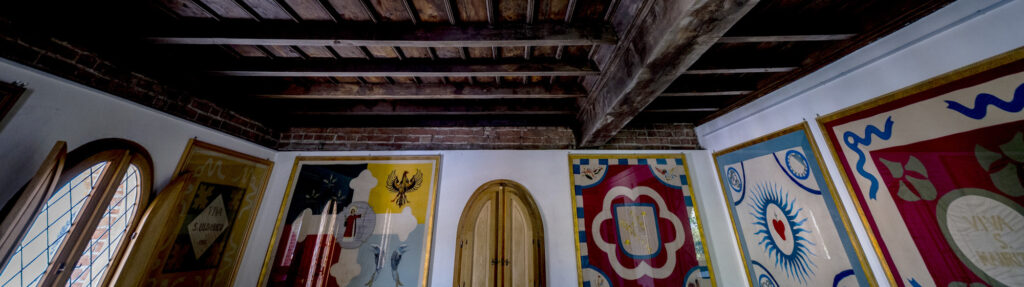
Today the Palazzo della Credenza (Palace of the Municipal Council) finds itself in a completely different context from the one in which it played its central role — but its beauty will never be a silent one: it remains one of the most distinguished medieval monuments in Ivrea and a precious testimony to its political and institutional history.
Ivrea Morainic Amphitheater
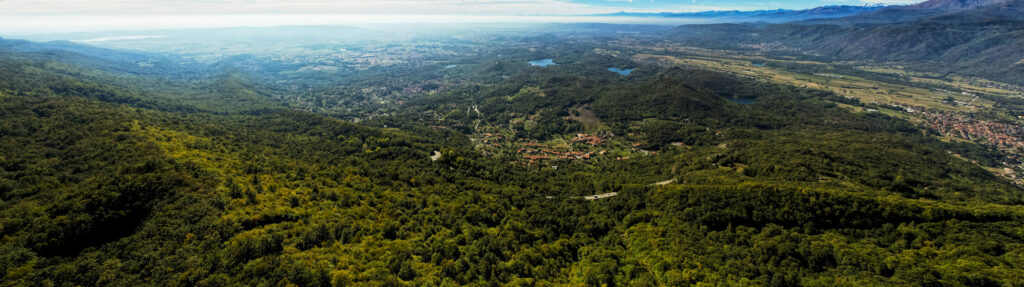
The Ivrea Morainic Amphitheater is a geological masterpiece, unique in some respects in the world. It presents itself as a pleasant landscape of a river, a handful of lakes and a ring of gentle hills, dominated by the straight and unmistakable Serra. But in reality it is much more.
Balteo Glacier
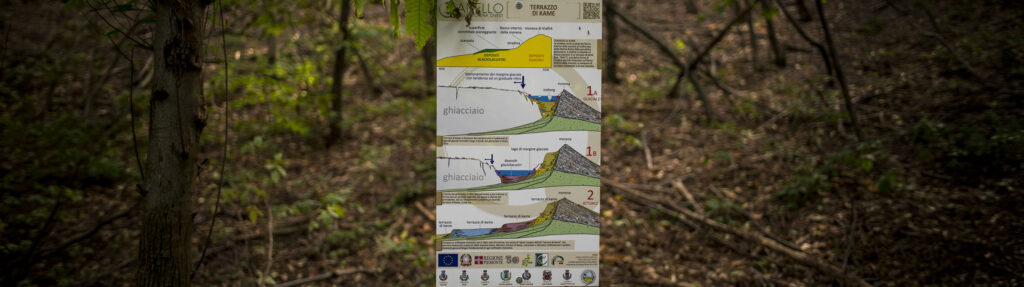
When they say “a force of nature”: it was the creative energy of the Balteo Glacier that sculpted the Ivrea Morainic Amphitheater between 900,000 and 11,500 years ago, over the course of at least nine successive glaciations.
Borghetto and Ponte Vecchio
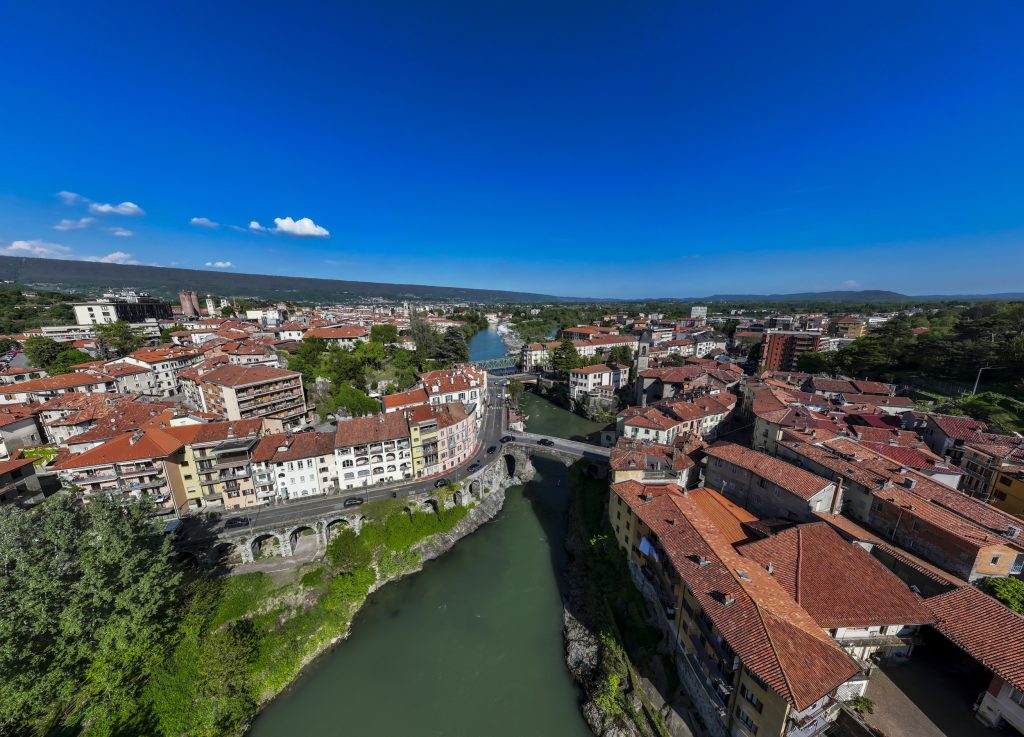
For century after century, the city remained huddled behind its imposing walls on the high ground, with the exception of a few outlying settlements. Above all, the Borghetto — a small, proudly self-contained world that accepts union with only one thing: the Ponte Vecchio. Water, rock, houses and history together paint the picture.
Serra d’Ivrea
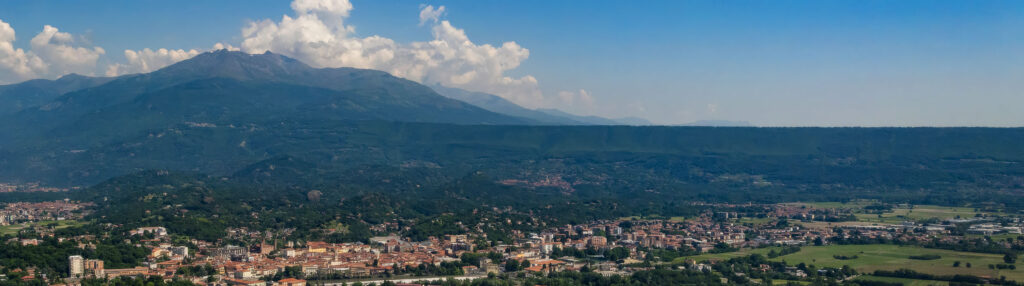
Every horizon has a symbol that makes it unique. The symbol of the Ivrea Morainic Amphitheater is the imposing and regular perfection of the Serra. Described even in distant times as “the greatest moraine in the Alps,” it is a source of wonder and admiration for those who see it for the first time and for those who see it every day.
Peat Bogs and “The Dancing Lands”
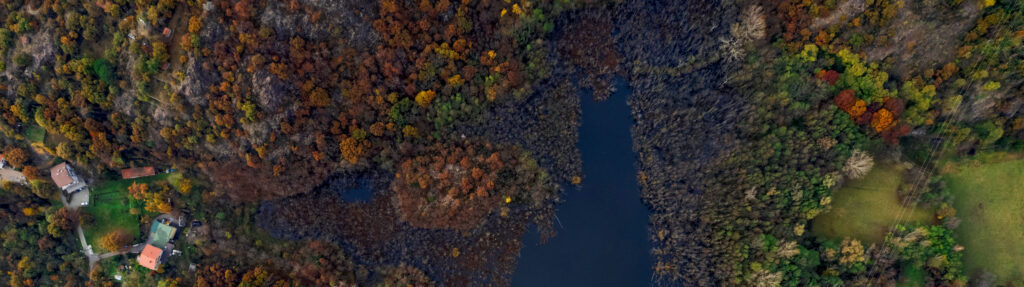
Water is, once again, the protagonist. It makes possible two phenomena, one of which is genuinely spectacular. The first are the “Peat Bogs”: especially damp places that, over an immensely long span of time, have built up a precious organic substance. The second are the “Terre Ballerine,” the Dancing Lands: an elastic surface layer of peat and roots, on which all it takes is a jump to set the trees dancing.
Borgo Olivetti Social Housing
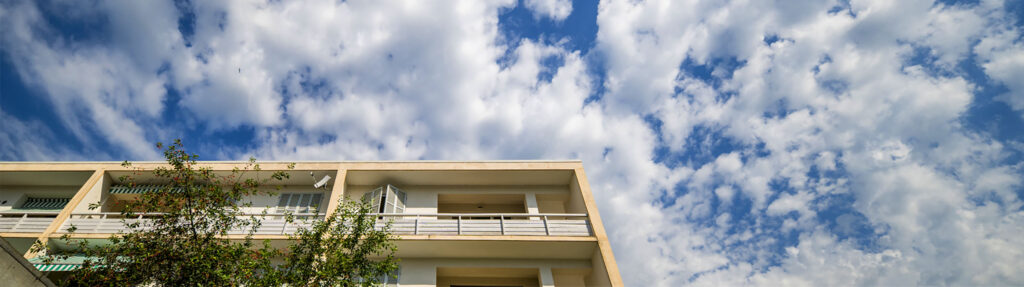
There is much to learn from Olivetti architecture by exploring its purpose, styles, and materials. But those who truly listen to buildings like this one may hear them whisper something even more meaningful: “There has been, there is, and there always will be a possible balance between work and life, between the city and nature, between utility and beauty.”
Santo Stefano Tower
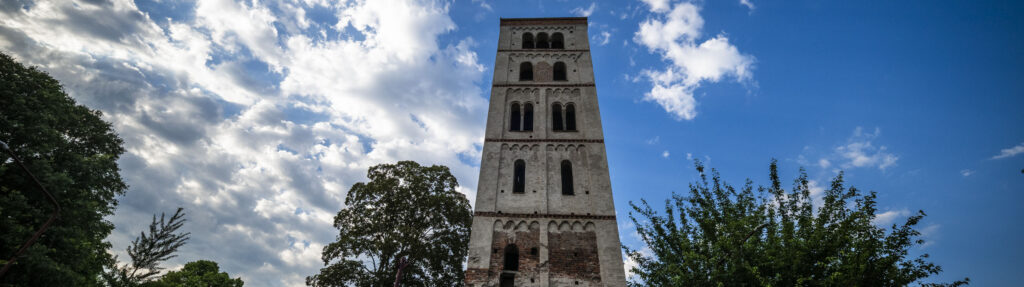
Rising above the Dora, this Romanesque bell tower is all that remains of the centuries-old abbey of Santo Stefano. It has seen everything: the splendour of the Benedictine years, neglect, an earthquake, French artillery, and adaptation to every conceivable purpose. Today it wears its centuries well, carrying its restoration with justified pride.
The Berretto frigio
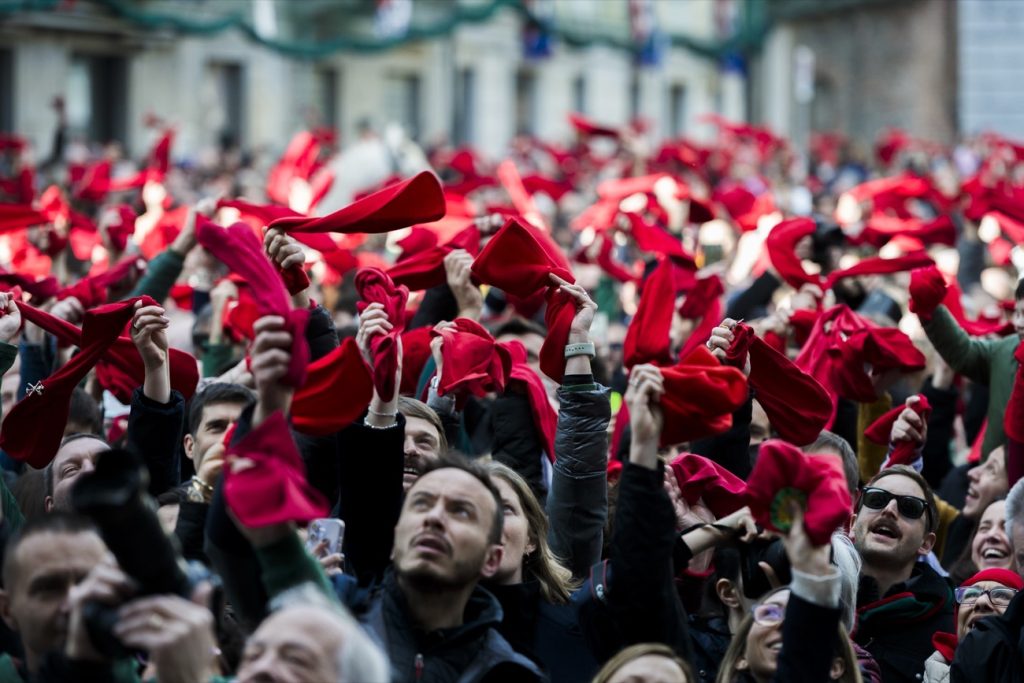
The Berretto frigio (Phrygian cap) is one of the most iconic symbols of the Historic Ivrea Carnival, with origins dating back to the Middle Ages. During the days of the Carnival, it is worn by the people of Ivrea and by visitors alike, as it represents the ideal of Freedom, the very heart of the celebration.
Five Lakes of Ivrea
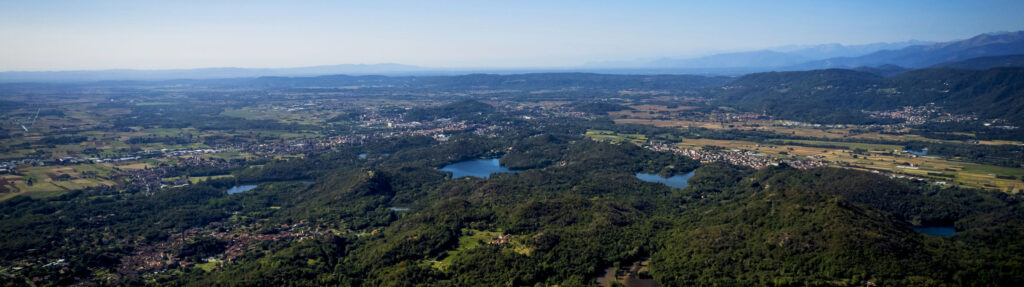
In the heart of the Ivrea Morainic Amphitheatre lies an area that combines scenic beauty with geological distinctiveness and — of particular interest — the opportunity to enjoy a wide range of outdoor activities in a truly unique natural setting.
Corso Costantino Nigra
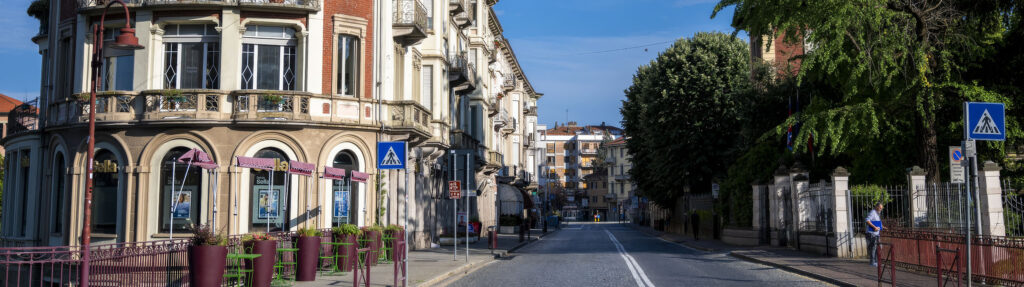
From the railway station, a distinctive avenue leads to a bridge, a fountain and a hotel, all overlooking the river. Here, the city immediately captures the eye, in every season and at every hour of the day. Along Corso Cavour, Ivrea’s ancient heart meets the city that embraced the call of the future.