The route

In the historic center

Discover the city on foot

Ivrea is a city with more than two thousand years of history. Since its earliest days, despite its modest size, it has played an important role. Nestled at the heart of a remarkably well-preserved glacial moraine amphitheater, it is a unique natural, historical, and cultural landscape waiting to be discovered. Perhaps one adjective captures its essence better than any other—an ambitious one, offered with a smile: “unclassifiable.” Over the centuries, Ivrea has been—and, depending on the occasion, still is—small yet significant, ancient yet contemporary, cautious yet forward-looking, bourgeois yet rebellious, devout yet spirited. That is why we invite you to explore its historic center, where the storytelling totems have been deliberately arranged without a strict chronological order. Wander freely among them, discovering unexpected stories, or listening to them, with the gentle sound of the Dora River in the background, like the soft crackle of a vinyl record.

The itinerary in the historic centre

The “P.A. Garda” Civic Museum and Piazza Ottinetti
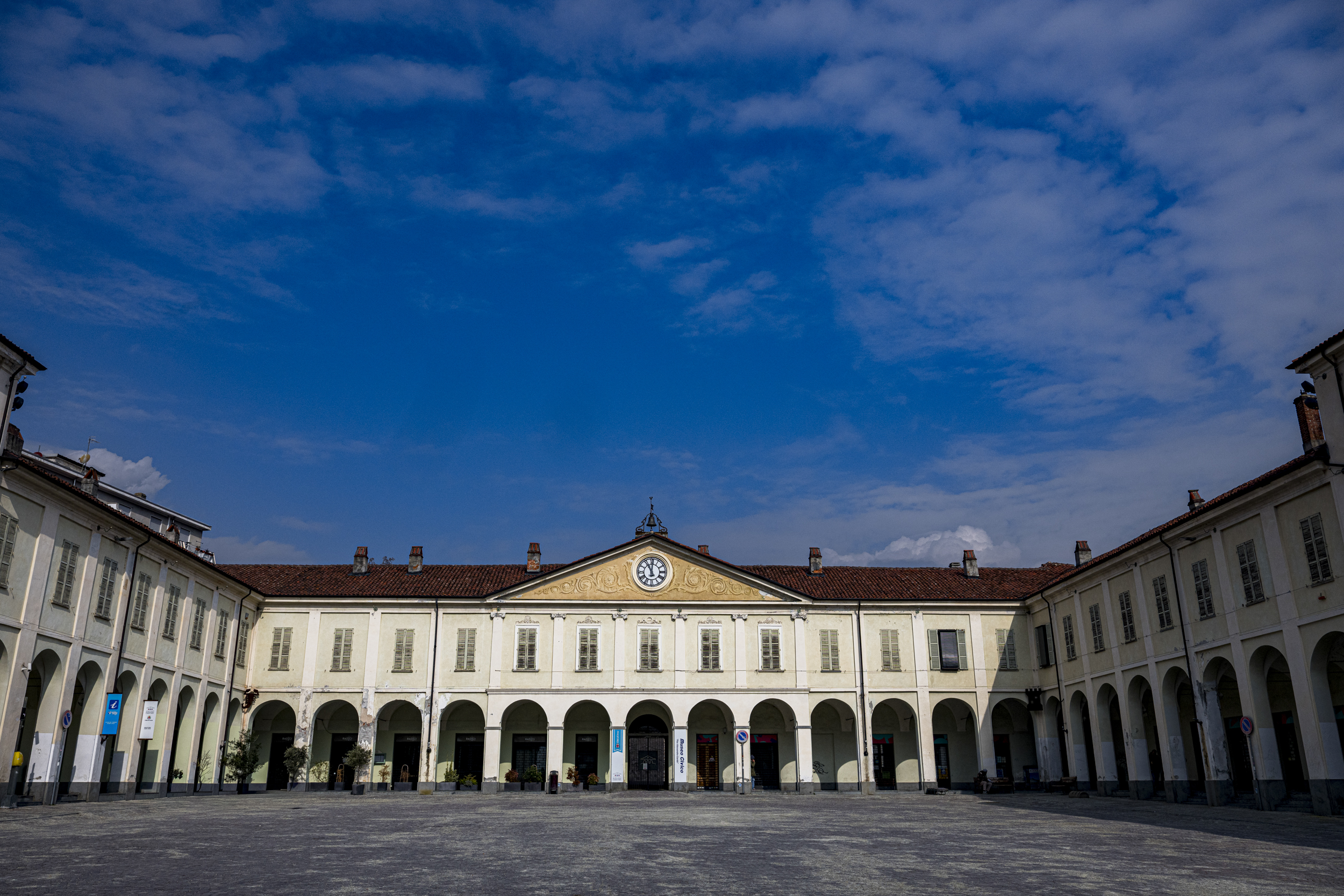
The museum houses an archaeological collection that traces the Roman origins of Ivrea. There are also two art collections of exceptional value: one featuring Oriental art and the other featuring paintings. These are generous bequests from two distinguished citizens, and the museum fosters a sense of community belonging.

Facciata con orologio e portici nella piazza storica di Ivrea sotto un ampio cielo azzurro

Via Palestro and Via Arduino, the decumanus maximus of ancient Eporedia, embody two thousand years of history. Each successive version of Ivrea has been built upon the one before it, giving the town a ‘vertical’ spirit and a layered character. This is evident as you stroll through the town, where you will encounter small and large spaces, closed and open spaces, ancient and contemporary features, and devout and rebellious elements.

“Splendor” and “Giuseppe Boaro” signs on the facade of a building in the historic center of Ivrea, on a cobblestone street

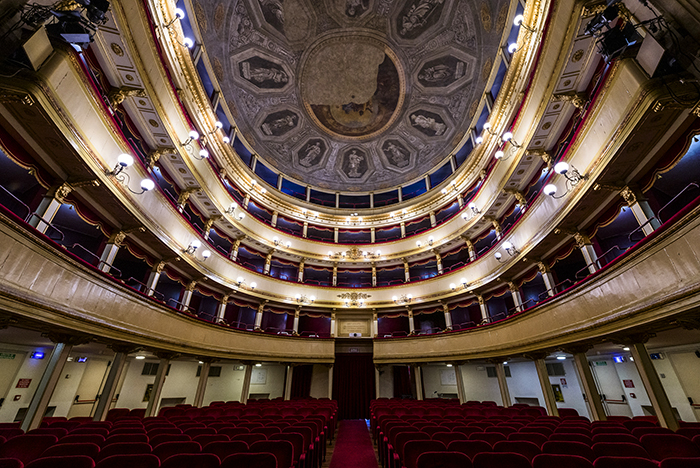
This Italian-style theatre is a source of pride for the city. It is one of those places where you instinctively lower your voice as you enter. Named after Giacomo Puccini’s great librettist, Giuseppe Giacosa, it shares some of his charisma: with roots that run deep in the local area and branches that reach out to the wider world.

The auditorium of the Giacosa Theater in Ivrea, featuring the stalls, rows of gilded boxes, and a frescoed ceiling

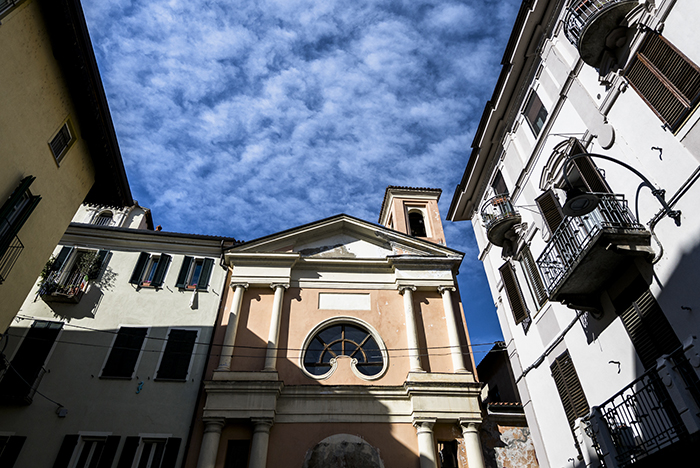
The church was founded in the 15th century by the Confraternity of Santa Marta and later took on Baroque features. Today, it is not used as a place of worship, but as a cultural venue and a focal point for the people of Ivrea. It is open to the community for exhibitions and conferences, and locals move about inside it as if it were their own home.

Peach building with columns and round window between taller ones.

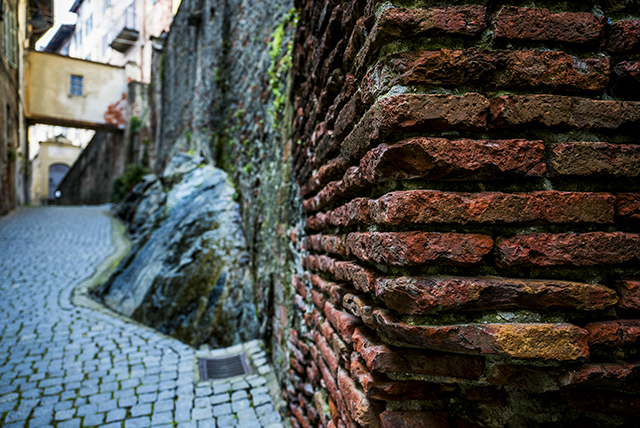
These sloping streets wind their way around; they were built on the steps of an ancient theatre that has almost disappeared, and they still bear its mark. At eye level, on the brick buttress leaning against the rock, you can also see the imprint of a hand. The show is over. But could anything be more theatrical?

A medieval alley with a brick wall and exposed rock in the historic center of Ivrea

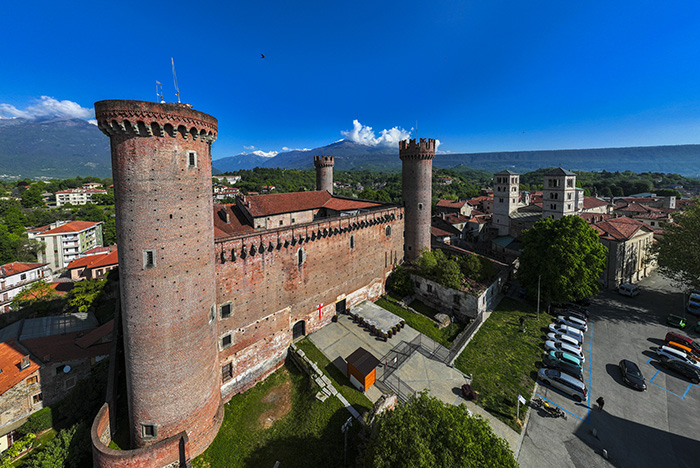
Centuries of festivities and games, as well as weapons, lightning striking gunpowder and prisoners behind bars, have given the castle its ‘mysterious’ charm. Every evening, it plays with the sky, creating an eternal postcard scene so rich in poetry that, for seven hundred years, even the swallows have been competing to fly into it.

Ivrea Castle with its medieval towers overlooking the city's historic center, with a view of the morainic amphitheater

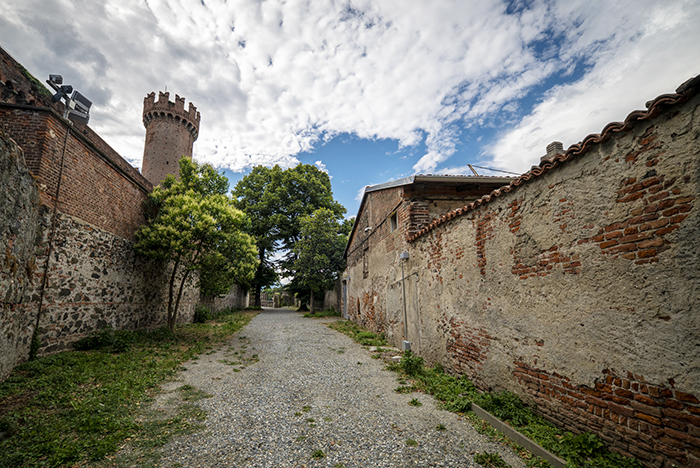
Almost like a ‘fifth tower’ of the castle, the new ramp climbs up the medieval ramparts, transforming their character from impregnable to inclusive. For the first time, the lower and upper parts of Ivrea are united, even to the north. The Castle Alley now provides a passage where one once could not even imagine it, bringing history and the horizon together.

Gravel path, brick walls, trees, round tower, cloudy sky.

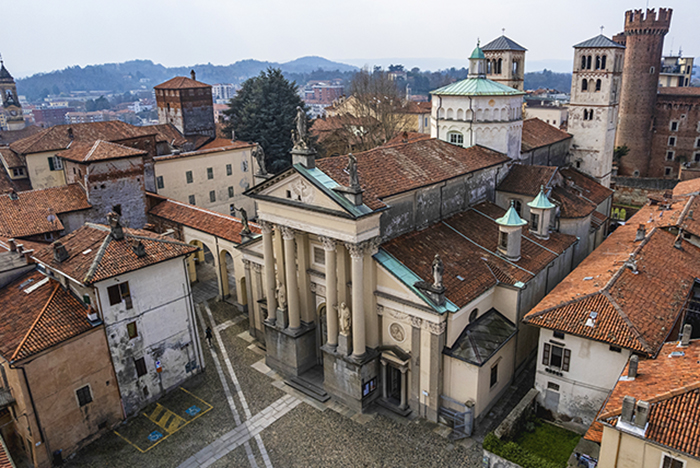
Ivrea Cathedral is also a monument to rebirth. Emerging victorious from the centuries, it tells its own story, evolving from a pagan temple to an early Christian church and finally becoming a cathedral. Inside, you can find a Roman sarcophagus, a medieval crypt, the remains of a saint, Romanesque bell towers, modern art, Baroque influences, and a Neoclassical façade.

Ivrea Cathedral, with its neoclassical façade and columns, set among the red rooftops of the historic center and the medieval towers

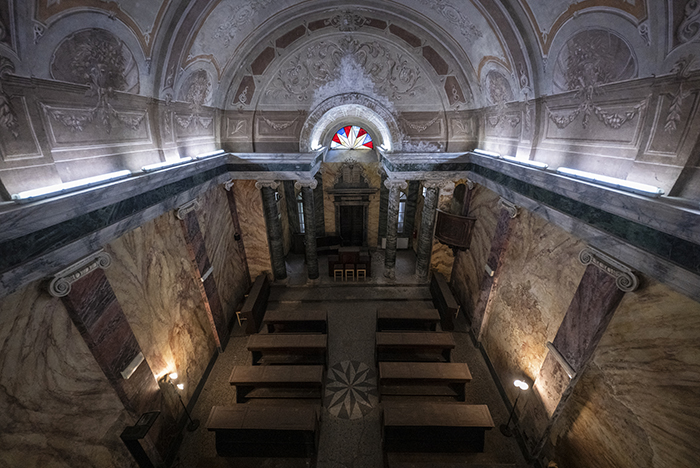
This street, one of the most distinctive in the historic centre, was home to the Jewish quarter for centuries. As a result, it still boasts a beautiful synagogue today. Furthermore, Samuel David Camillo Olivetti, the man who would change the city’s destiny, was born in one of the first houses on this street in August 1868.

Interior of a historic chapel in Ivrea featuring wooden pews, marble columns, and an apse with a stained-glass window

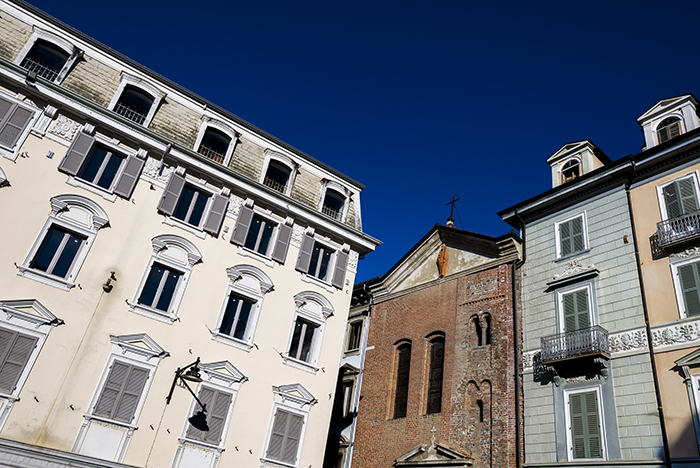
Over a thousand years ago, a Germanic bishop named Ulderico brought a child back to life in an inn in Ivrea. The child grew up, became a priest, and built a church on the site of the former inn. Over the centuries, the church has been filled with works of art, including the statue of the saint adorning the high-up façade.

The brick facade of a medieval church flanked by historic buildings in the center of Ivrea, under a clear sky.

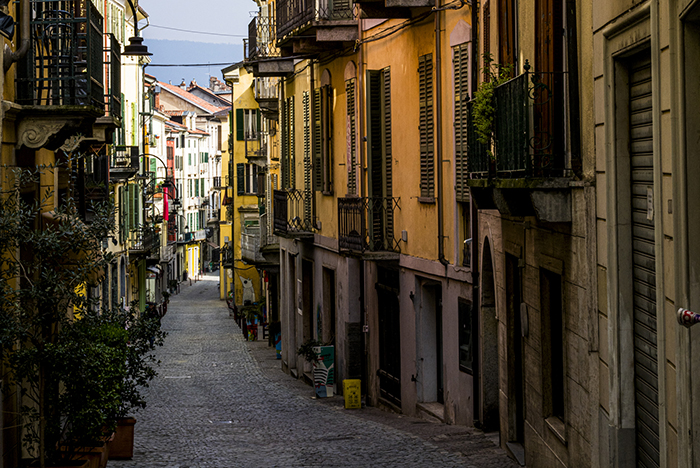
With its Roman layout, medieval heart and working-class spirit, this street has nurtured, in its very corners: the childhood of an industrialist, the genius of a designer, the name of an online platform – all with an international flavour. Now it feigns detachment from world events. But it has woven a wisteria into its hair and is perhaps preparing something new.

Cobbled alleys in the medieval historic center of Ivrea, with colorful facades and balconies that evoke the city’s character

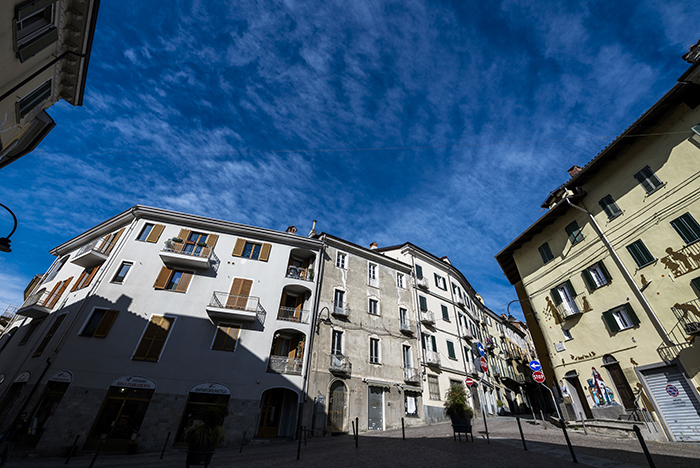
At the heart of the San Domenico district lies ‘Piazza Maretta’, as the people of Ivrea like to call it, a square that is both popular and unique. Rather than simply being visited, it invites you to understand, appreciate and experience its distinct atmosphere. Set on a slope, it remains firmly rooted in its traditions.

A square in the historic center of Ivrea, with traditional facades and balconies under a blue sky

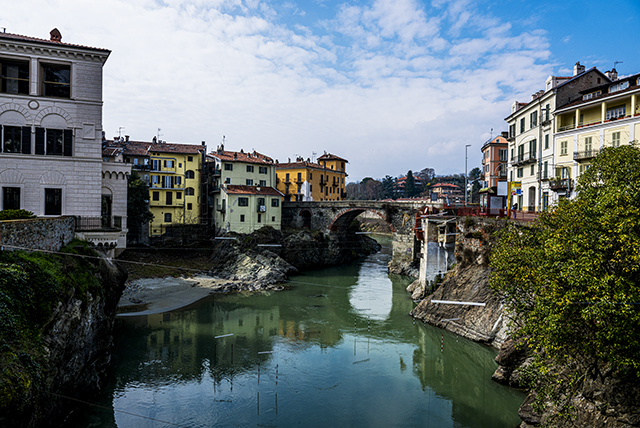
For centuries, the city has been nestled behind its imposing walls on the upper part of the hill, with only a few settlements nearby. The most notable of these is Borghetto, a small, fiercely independent settlement that shares only a connection with the Ponte Vecchio. The water, the rock, the houses and the history all come together to create the picture.

Colorful houses and a stone bridge over the Dora Baltea River in the historic center of Ivrea

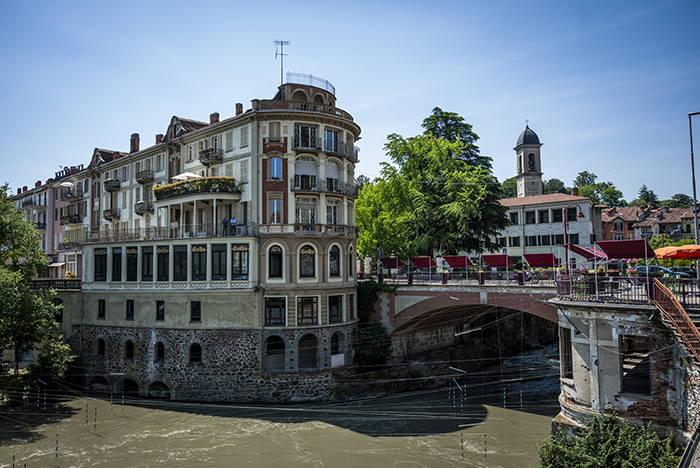
Originally a historic restaurant and later a hotel, during the Olivetti era it became the preferred gathering place and accommodation for the intellectuals and artists who gravitated around the company. As the poet Giovanni Giudici recalled: “The Dora / a humble and modest / dwelling – yet still the same – / whose doorstep, at this very hour, / is graced by successful men.”

Historic curved riverside building with balconies and terraces beside an arched bridge and bell tower

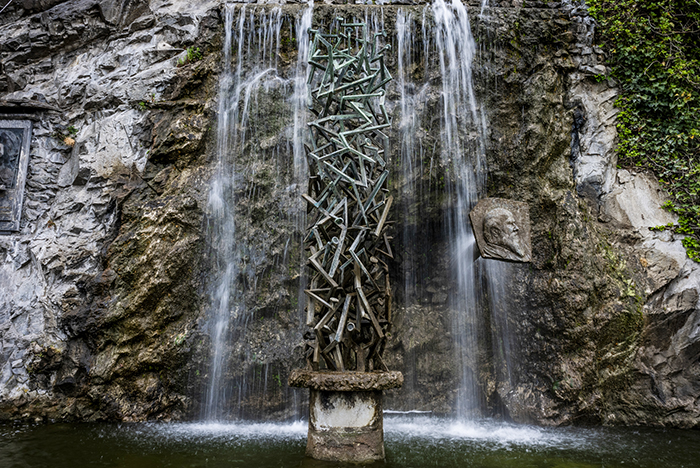
Not all monuments merely celebrate the past. This one, for example, conveys Camillo Olivetti’s anxiety about the future, transforming it into a sense of longing. His profile emerges from the ancient rock, gazing towards his red-brick factory beyond the river, representing the future.

A columnar metal sculpture on a pedestal in the cascade of a fountain set into the rock face in Ivrea

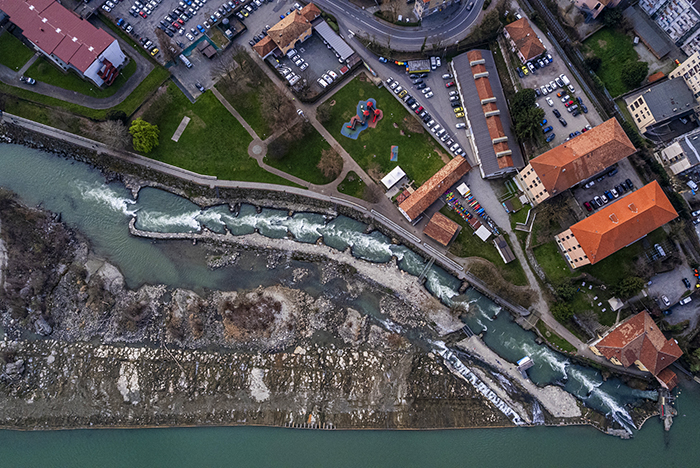
The Canoa Stadium is a source of pride for Ivrea, putting the town in the international spotlight thanks to the quality of its sports facilities and its absolutely unique town centre location. The ‘town of towers’ can also be admired in all its beauty from here.

Dams on the Dora Baltea River in Ivrea; aerial view of the riverfront with waterfalls and the red rooftops of the city center

In Ivrea, it is also about listening to the passage of time. Here, time whispers of peace: the peace of the spirit, emanating from the former Convent of San Francesco, and the peace of arms, proclaimed by Casa Stria. On 2 May 1391, Amadeus VII, the nobles and the rebels of the Canavese ended the Tuchinaggio in this exquisitely decorated terracotta residence.

Window with wooden shutters on a frescoed wall and a decorated arch in the historic center of Ivrea

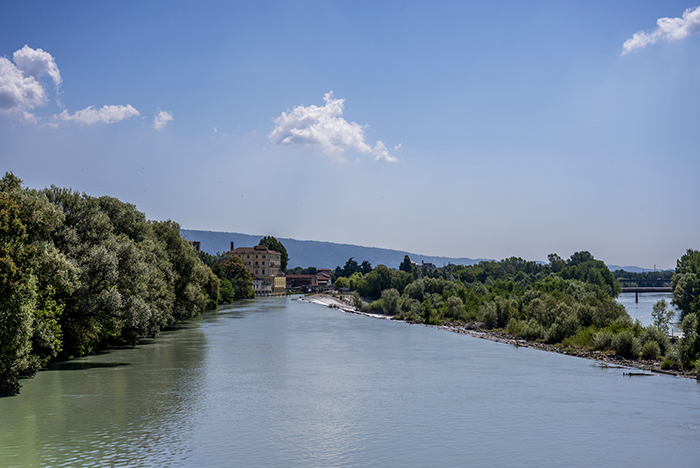
It’s an ancient story that today seems like a fairy tale. Water made it possible; water wiped it out; water brought it back to light. For a city built on a river, it could not have been otherwise. The story recounts one of the greatest river ports of its time and a marvellous bridge that defied the treacherous Dora.  

Wide river between green banks, distant building, blue sky.

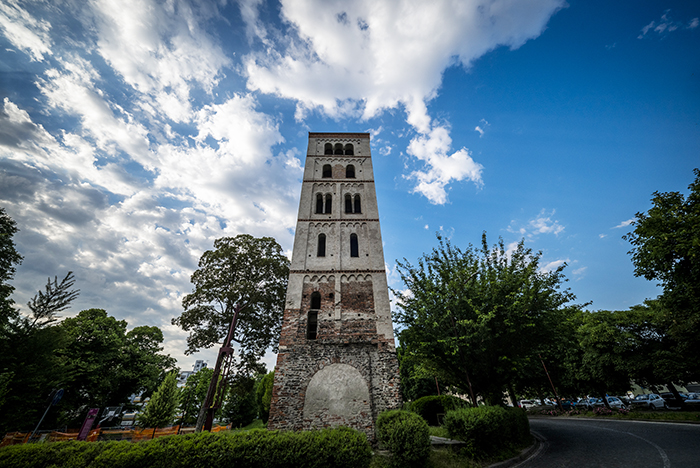
Towering over the River Dora, the Romanesque bell tower of the Abbey of Santo Stefano is all that remains of the thousand-year-old building. It has witnessed Benedictine splendour, neglect, an earthquake, French artillery and various adaptations for different uses. Today, it bears the marks of the centuries well and displays its restoration with justified pride.

A medieval stone bell tower in the historic center of Ivrea against a blue, cloudy sky

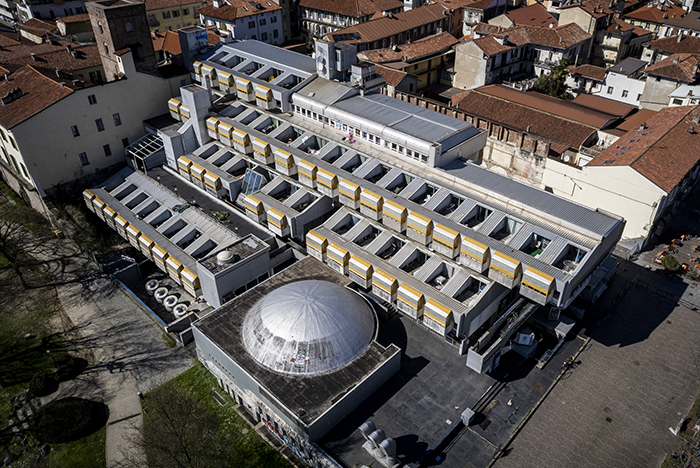
This is a bold venture by Olivetti into the ‘old’ part of Ivrea, combining residential blocks, sports centres and cultural centres in a design that is reminiscent of a ship. This giant ‘typewriter’, where people can live, learn, swim and read, is crying out for a new lease of life.

The Olivetti Complex, with its shed-roofed pavilions and dome in the center of Ivrea, a symbol of industrial architecture

There are many traces of Eporedia, but this is the most impressive. From here, it is easy to imagine the building’s former magnificence against the backdrop of the city. It is more difficult to fathom the crowd’s taste for the blood that fills the arena. Up there is the ‘Sleeping Beauty’: perhaps she is not asleep, but has merely closed her eyes to avoid seeing.

Semicircular ruins of the Roman amphitheater in Ivrea, viewed from above; integration into the urban landscape

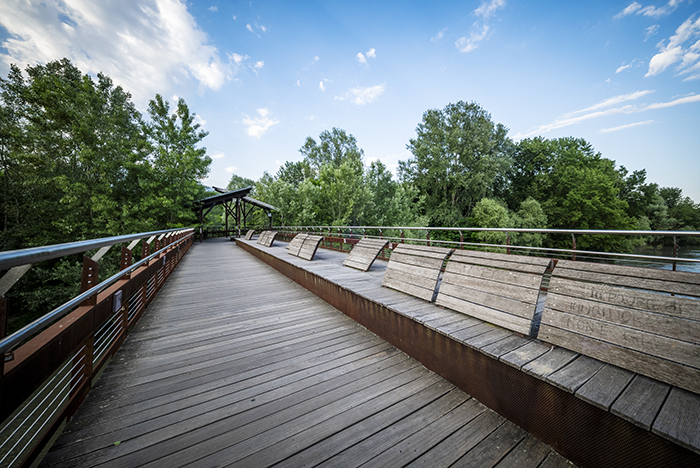
This remarkable structure, which has been admired since the last century, is more than just a footbridge: it is a place where you can pause and enjoy one of Ivrea’s most distinctive features – its setting. Situated on the banks of the Dora and at the point where the lines drawn by the mountains and the morainic amphitheatre converge, the town appears in all its grace.

A wooden pedestrian walkway with seats offering panoramic views of the river in Ivrea, surrounded by trees

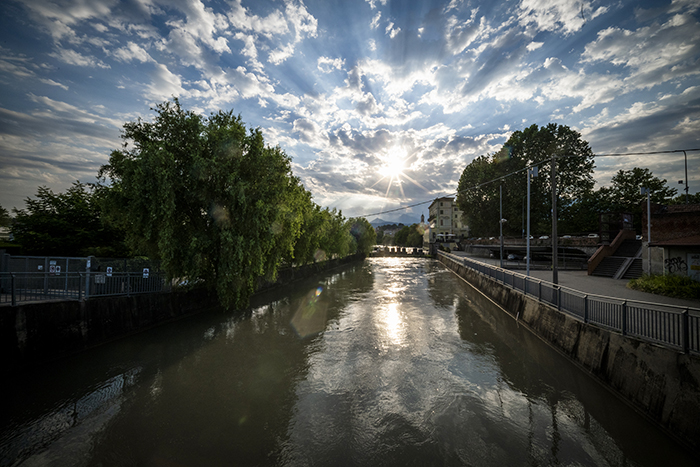
The city’s deep and inextricable link with water is also evident in one of the region’s most significant hydraulic projects: the Ivrea Canal. Flowing for around 75 kilometres from Ivrea to Vercelli, it is one of the most significant legacies of the Middle Ages in the area. This waterway has been marginally linked to two illustrious figures in history: Leonardo da Vinci and Napoleon Bonaparte.

Dora Baltea in Ivrea at sunset, with the sun reflecting off the water between the city’s embankments
Canoe Stadium
Lorem ipsum
The Canoe Stadium is one of Ivrea's proudest achievements, placing the city in the international spotlight:...
"Natale Capellaro" Footbridge
Lorem ipsum
This elegant structure, long dreamed of since the last century, is a footbridge where you do not simply...
Giuseppe Giacosa Civic Theatre
Lorem ipsum
A traditional Italian-style theatre that stands as one of the city's proudest landmarks, it is the kind...
Church of Saint Martha
Lorem ipsum
Founded in the 15th century by the Confraternity of Saint Martha, the church later took on the elegant...
Church of San Nicola da Tolentino
Lorem ipsum
The story of one of the finest examples of Baroque architecture in the Canavese region begins with a...
Vincenzo Gioberti Square
Lorem ipsum
The heart of the San Domenico district, known to every resident simply as "Piazza Maretta" (Maretta Square),...
Church of Santa Croce
Lorem ipsum
A confraternity won the people's hearts during the tragedy of the plague, and the community helped it...
Via Quattro Martiri and the Synagogue
Lorem ipsum
One of the most distinctive streets in Ivrea's historic centre, Via Quattro Martiri was, for centuries,...
East Residential Complex – Hotel La Serra
Lorem ipsum
Here is one of the boldest incursions of Olivetti architecture, with its distinctly international character,...
Camillo Olivetti Fountain
Lorem ipsum
Not every monument is meant simply to celebrate the past. This one, for example, expresses Camillo Olivetti’s...
Castle Lane
Lorem ipsum
Almost a "fifth tower" of the castle, the new ramp climbs the medieval ramparts and reverses their meaning...
The Church of Sant'Ulderico and the Town Square
Lorem ipsum
More than a thousand years ago, in an inn in Ivrea, a Germanic bishop named Ulderico raised a child from...
Santo Stefano Tower
Lorem ipsum
Rising above the Dora, this Romanesque bell tower is all that remains of the centuries-old abbey of Santo...
Casa Stria and Former Convent of San Francesco
Lorem ipsum
Ivrea is also about listening to time. Which here speaks of peace: the peace of the spirit, whispered...
Via Arduino
Lorem ipsum
Roman grid, medieval heart, popular spirit — this street has cradled at its corners: the childhood of...
P.A. Garda Civic Museum and Ottinetti Square
Lorem ipsum
The museum houses an archaeological collection that tells the story of Ivrea's Roman origins. It is also...
Via Palestro and the origins of Ivrea
Lorem ipsum
Together with Via Arduino, the decumanus maximus of ancient Eporedia, Via Palestro embodies two thousand...
Remains of the roman Theatre
Lorem ipsum
These streets slope and follow a gentle curve: they were laid out over the seating tiers of an ancient...
Roman amphitheater
Lorem ipsum
Many traces of Eporedia remain, but this is its most magnificent. From here it is easy to imagine the...
Pons Maior and the River Port
Lorem ipsum
An ancient story that today almost feels like a fairy tale. Water made it possible, water erased it,...
Cathedral of Santa Maria Assunta
Lorem ipsum
Ivrea's Cathedral is also a monument to renewal. Having endured the passage of centuries, it tells their...