
The Church of San Bernardino
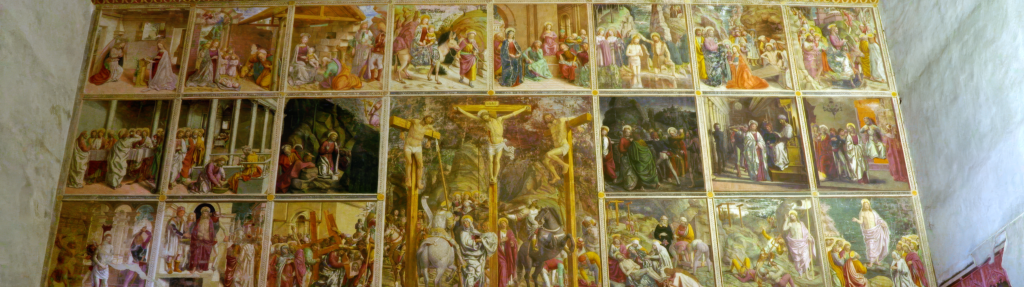
Home to the Olivetti family in the early twentieth century, the church and convent house the fresco cycle by Giovanni Martino Spanzotti, Vita e Passione di Cristo — a precious example of Renaissance art in Piedmont. The true protagonist? Humanity itself: faces, figures, humble settings, a vision closely aligned with Franciscan ethics.
Laboratory-Museum Tecnologic@mente
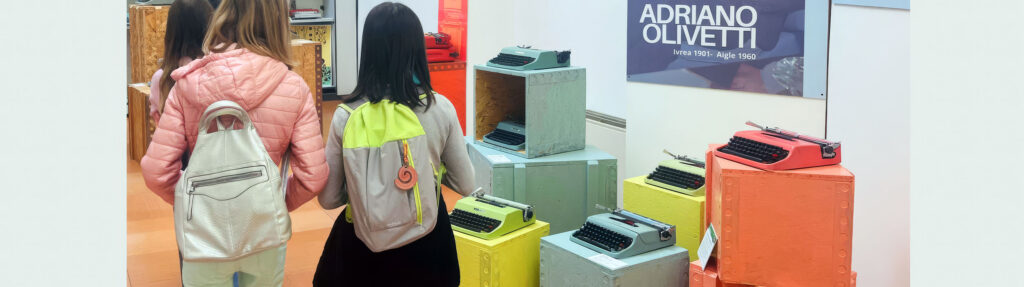
Two souls in one body: the Museum, with its collections of typewriters, mechanical and electronic calculators, and computers; and the Laboratory, with its educational programmes for Italian schools. All in the name of Natale Capellaro, the brilliant designer whose calculating machines helped make Olivetti a world leader.
East Residential Complex – Hotel La Serra
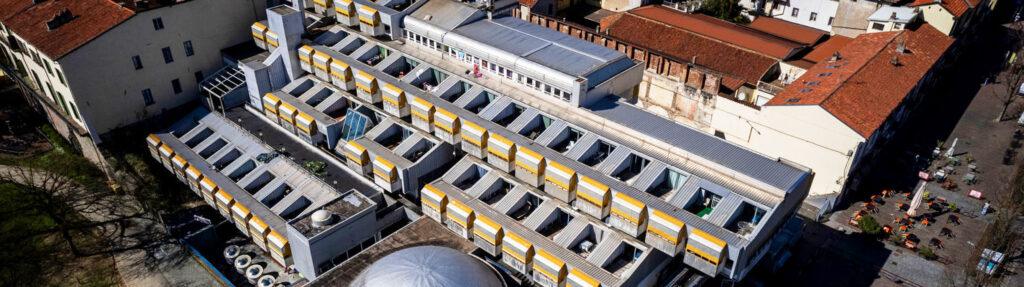
Here is one of the boldest incursions of Olivetti architecture, with its distinctly international character, into the “old” city of Ivrea: part residential complex, part sports centre, part cultural hub, and even, in some ways, part ship. This giant typewriter of a building, where people can live, learn, swim, and even read, is waiting to be brought back to life.
Study and Research Centre
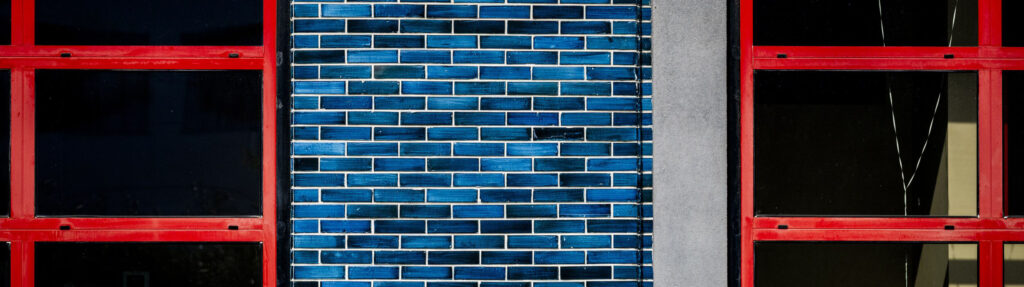
A novel once observed that “Ivrea is a kind of beach where the future arrives in bottles.” Perhaps that is why the building where new Olivetti products were conceived, besides being a masterpiece of architectural form, was built in the color of the sea?
Dora Hotel
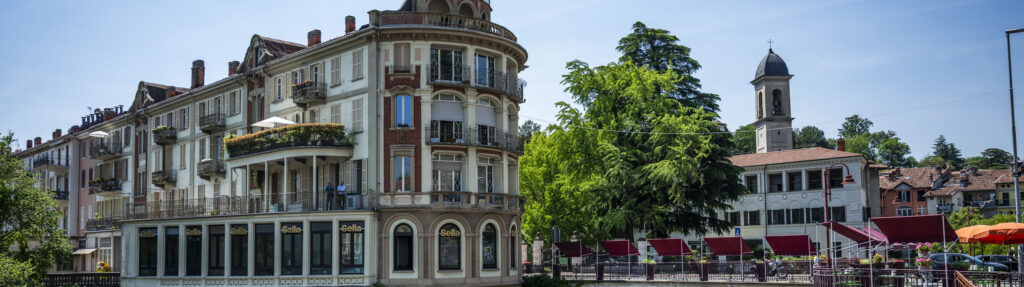
Historic restaurant, later a hotel, during the Olivetti era it became the favourite place to stay and meet for the intellectuals and artists who gravitated around the company. As the poet Giovanni Giudici recalled: “The Dora / humble and modest / dwelling – yet still the place – / whose thresholds, at this very hour / are graced by successful men.”
Olivetti Historical Archive Association

An archive is never just a repository of documents, and an industrial archive even less so. This is especially true when the industry in question is Olivetti, with its history of innovation and its deep social and cultural commitment. Here, the archive becomes a source of stories that continue to inspire the present.
Former Sertec Building
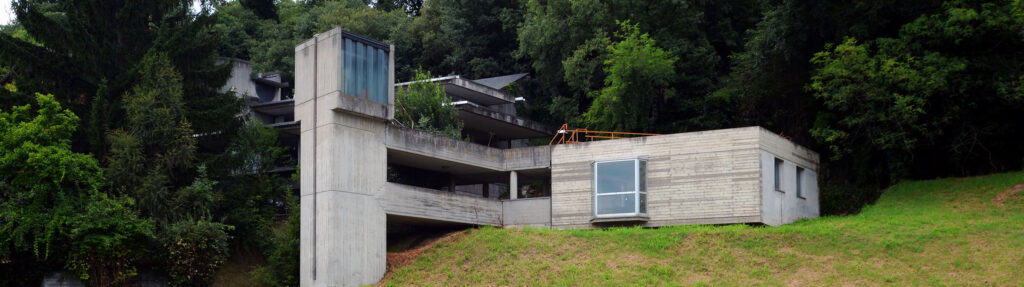
If Olivetti is a planet, Sertec is one of its satellites, founded in the late 1960s as an international engineering company. Its first headquarters embodied the boldness of its ideas: exposed concrete on the external tower, forms that interact with the hillside, and red interiors inspired by Pop Art.
New Olivetti Office Building
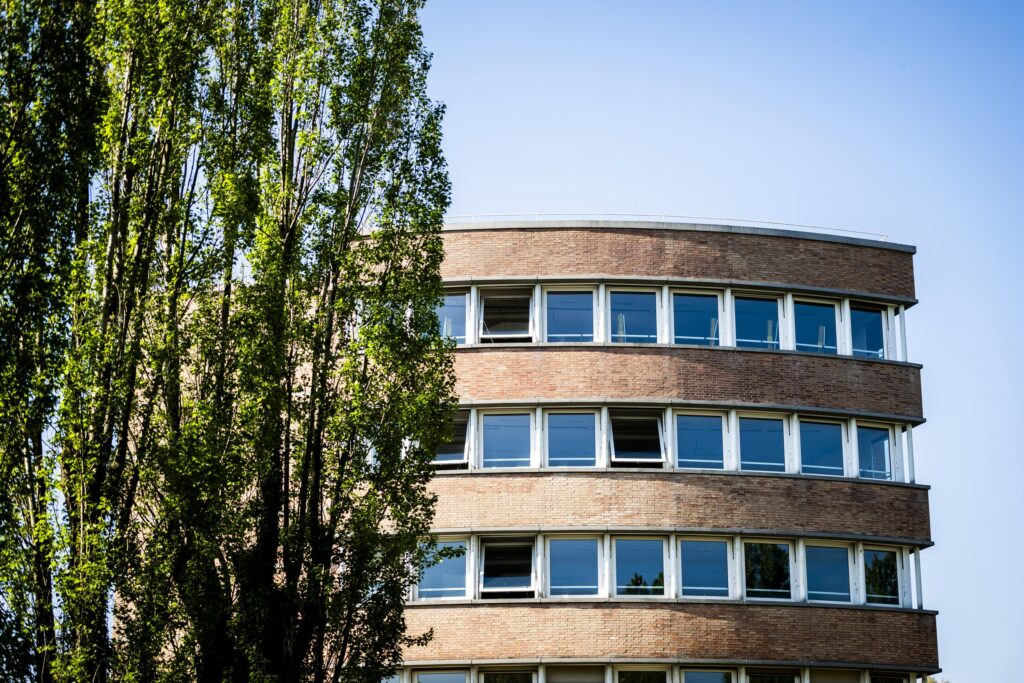
An Office Building already existed, and the new one could not simply imitate it. So, a distinguished architect, also a designer awarded four Compasso d’Oro prizes, created an original building. Seen from below, it seems almost to move. Seen from above, the two buildings together form the shape of a shooting star.
Camillo Olivetti Fountain
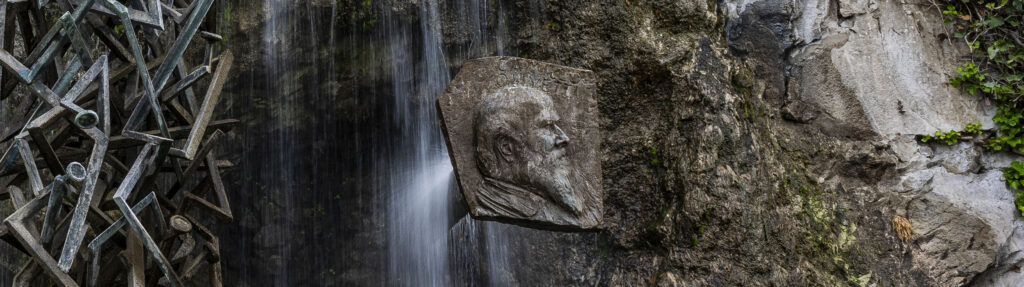
Not every monument is meant simply to celebrate the past. This one, for example, expresses Camillo Olivetti’s longing for the future and gives shape to that aspiration. His face emerges from the ancient rock, reaching out from the heart of the old town toward his red-brick Factory, a future lying beyond the river.
Olivetti Office Building
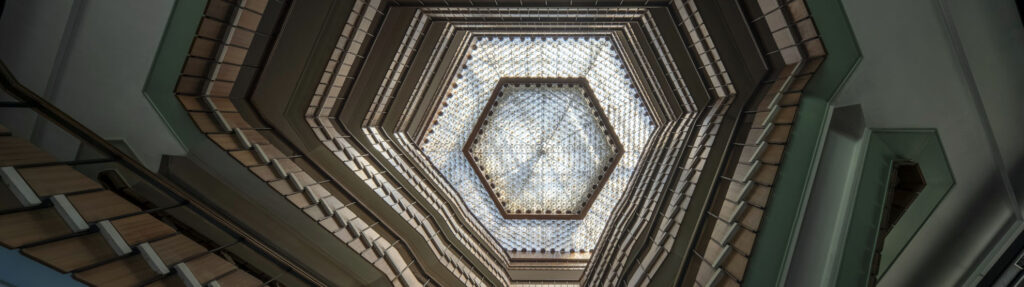
Palazzo Uffici, enveloped by nature and filled with daylight, meticulously crafted with refined materials and organized around its magnificent central staircase, a masterpiece in its own right, appears less like a remarkable work of architecture than like a verb relentlessly conjugated in the future tense.
Ivrea Castle
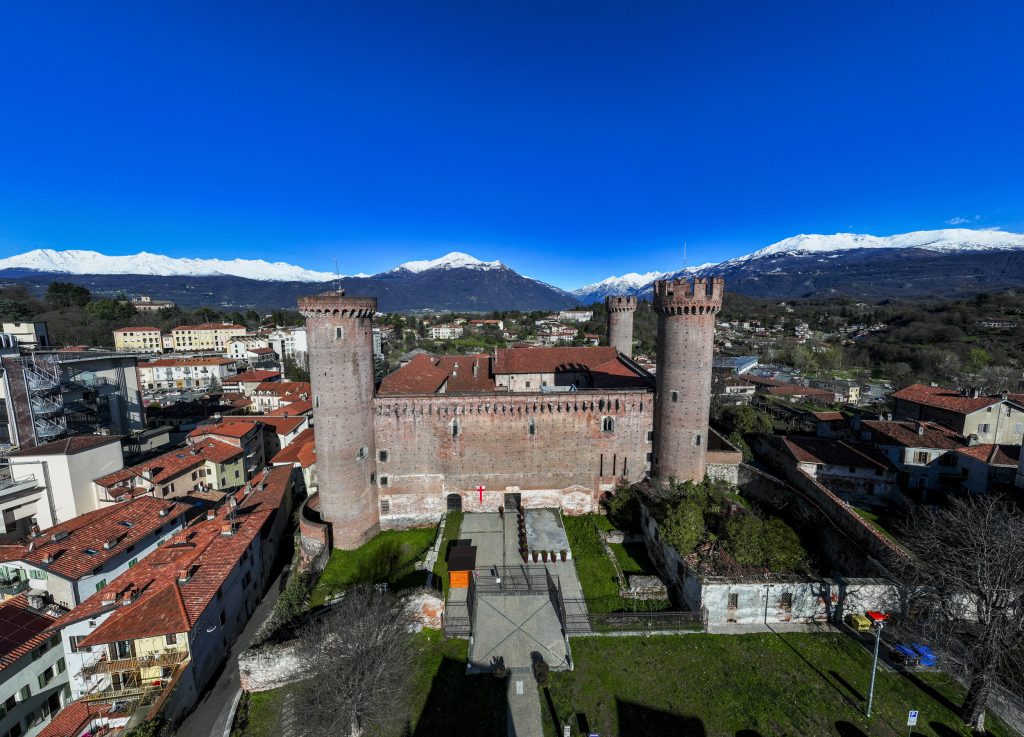
It took centuries of feasts and games, but also of arms, lightning over gunpowder and prisoners behind iron bars, to give the Castle its charisma “wrapped in mystery.” Every evening it plays with the sky in an eternal postcard, so full of poetry that for seven hundred springs even the swallows have competed to nest within its walls.
Castle Lane
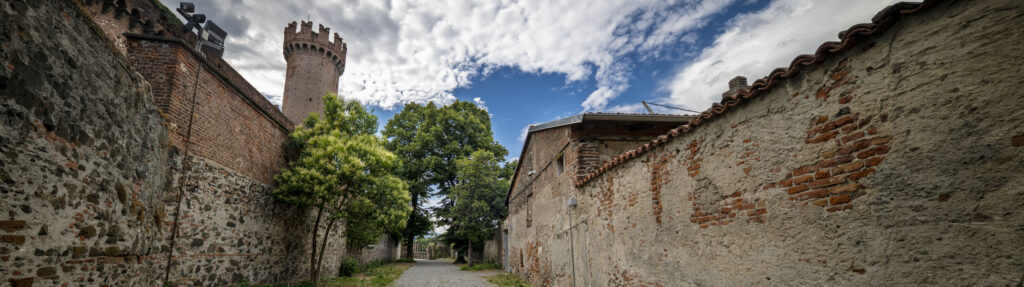
Almost a “fifth tower” of the castle, the new ramp climbs the medieval ramparts and reverses their meaning — from impregnable to inclusive. For the first time, to the north as well, the lower and upper parts of Ivrea are joined. Castle Lane opens a passage where none was previously imaginable, holding together history and horizon.