In the historic center
Discover the city on foot
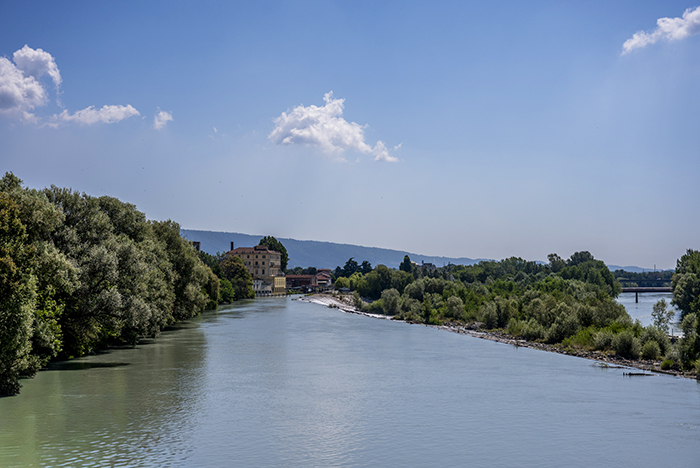
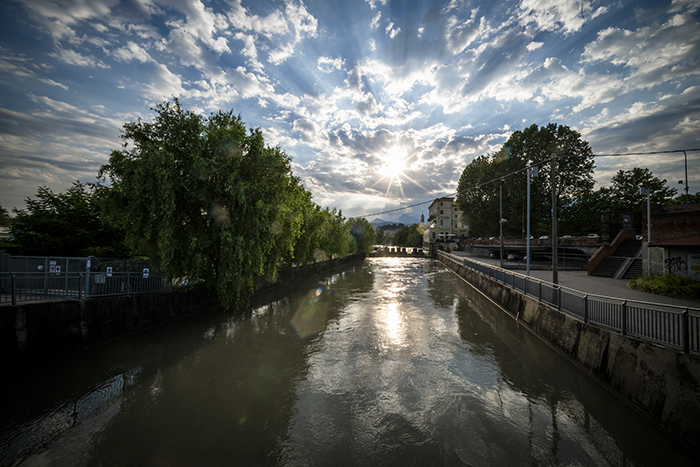
Ivrea is a city with more than two thousand years of history. Since its earliest days, despite its modest size, it has played an important role. Nestled at the heart of a remarkably well-preserved glacial moraine amphitheater, it is a unique natural, historical, and cultural landscape waiting to be discovered. Perhaps one adjective captures its essence better than any other—an ambitious one, offered with a smile: “unclassifiable.” Over the centuries, Ivrea has been—and, depending on the occasion, still is—small yet significant, ancient yet contemporary, cautious yet forward-looking, bourgeois yet rebellious, devout yet spirited. That is why we invite you to explore its historic center, where the storytelling totems have been deliberately arranged without a strict chronological order. Wander freely among them, discovering unexpected stories, or listening to them, with the gentle sound of the Dora River in the background, like the soft crackle of a vinyl record.
The itinerary in the historic centre
The “P.A. Garda” Civic Museum and Piazza Ottinetti
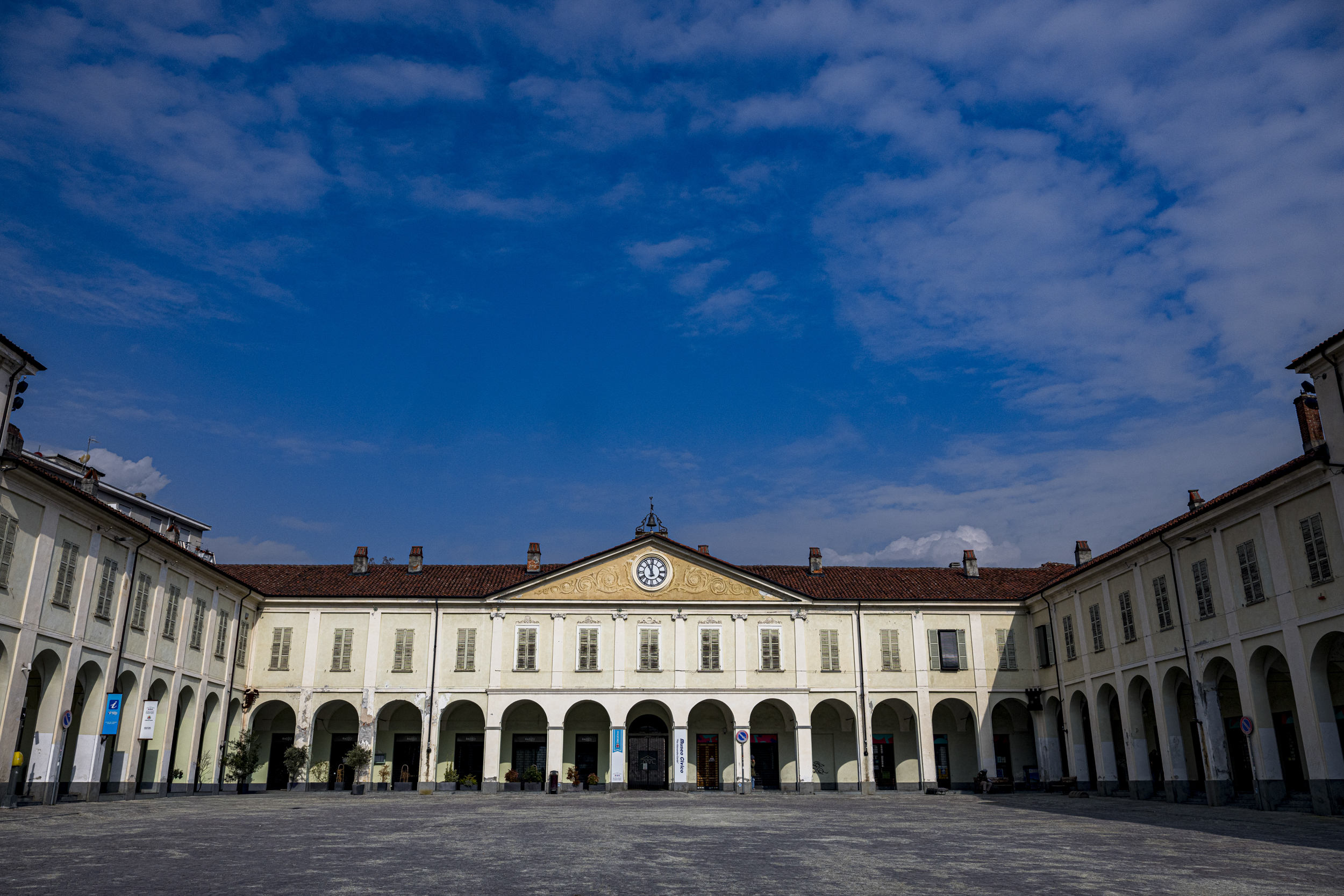
The museum houses an archaeological collection that traces the Roman origins of Ivrea. There are also two art collections of exceptional value: one featuring Oriental art and the other featuring paintings. These are generous bequests from two distinguished citizens, and the museum fosters a sense of community belonging.
Via Palestro
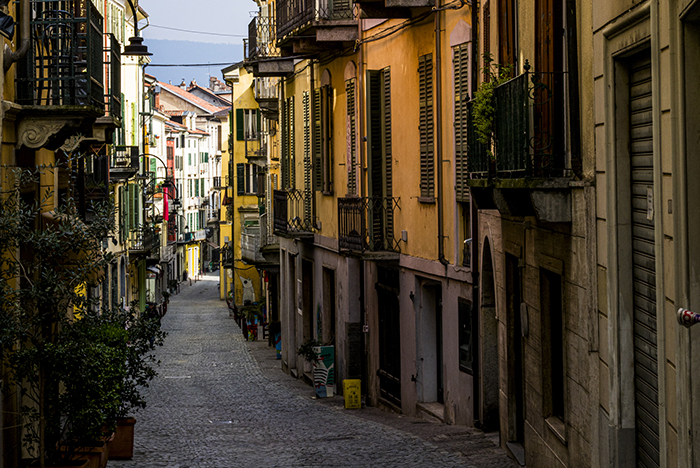
Via Palestro and Via Arduino, the decumanus maximus of ancient Eporedia, embody two thousand years of history. Each successive version of Ivrea has been built upon the one before it, giving the town a ‘vertical’ spirit and a layered character. This is evident as you stroll through the town, where you will encounter small and large spaces, closed and open spaces, ancient and contemporary features, and devout and rebellious elements.
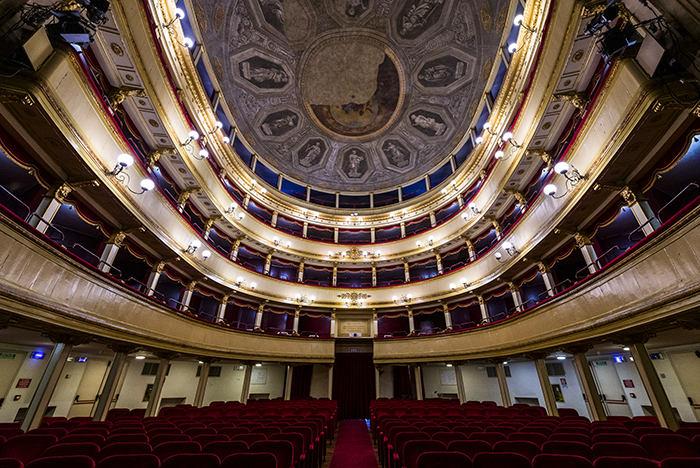
Giacosa Theatre
This Italian-style theatre is a source of pride for the city. It is one of those places where you instinctively lower your voice as you enter. Named after Giacomo Puccini’s great librettist, Giuseppe Giacosa, it shares some of his charisma: with roots that run deep in the local area and branches that reach out to the wider world.
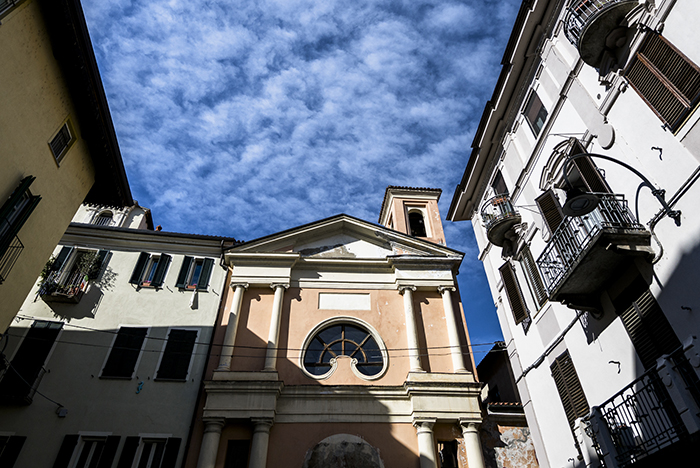
Santa Marta Church
The church was founded in the 15th century by the Confraternity of Santa Marta and later took on Baroque features. Today, it is not used as a place of worship, but as a cultural venue and a focal point for the people of Ivrea. It is open to the community for exhibitions and conferences, and locals move about inside it as if it were their own home.
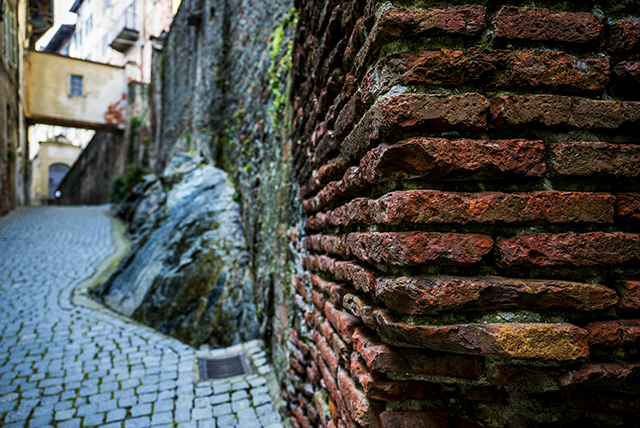
Remains of the roman Theatre
These sloping streets wind their way around; they were built on the steps of an ancient theatre that has almost disappeared, and they still bear its mark. At eye level, on the brick buttress leaning against the rock, you can also see the imprint of a hand. The show is over. But could anything be more theatrical?
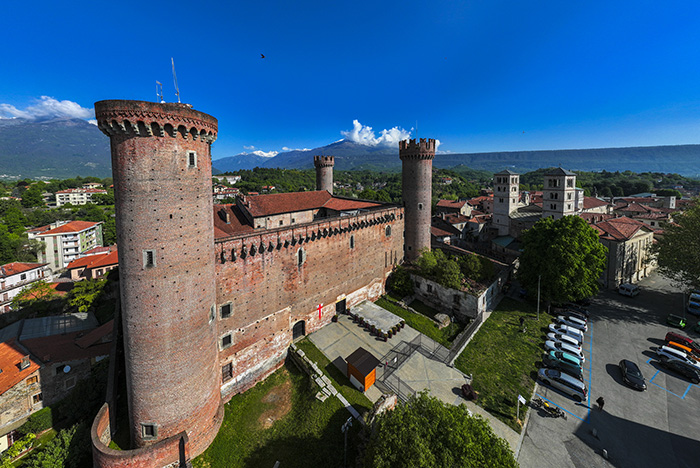
The castle
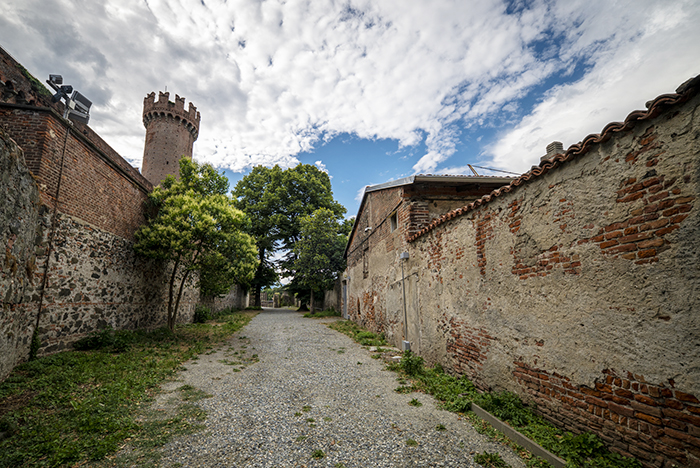
Centuries of festivities and games, as well as weapons, lightning striking gunpowder and prisoners behind bars, have given the castle its ‘mysterious’ charm. Every evening, it plays with the sky, creating an eternal postcard scene so rich in poetry that, for seven hundred years, even the swallows have been competing to fly into it.
Castle Lane
Almost like a ‘fifth tower’ of the castle, the new ramp climbs up the medieval ramparts, transforming their character from impregnable to inclusive. For the first time, the lower and upper parts of Ivrea are united, even to the north. The Castle Alley now provides a passage where one once could not even imagine it, bringing history and the horizon together.
Cathedral of Santa Maria Assunta
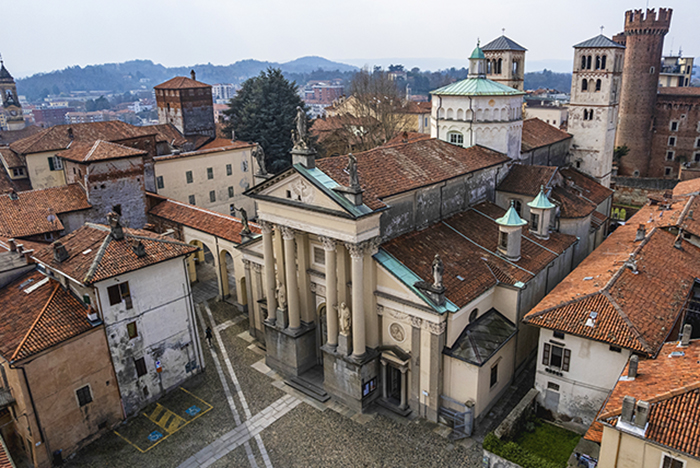
Ivrea Cathedral is also a monument to rebirth. Emerging victorious from the centuries, it tells its own story, evolving from a pagan temple to an early Christian church and finally becoming a cathedral. Inside, you can find a Roman sarcophagus, a medieval crypt, the remains of a saint, Romanesque bell towers, modern art, Baroque influences, and a Neoclassical façade.
Via Quattro Martiri and the Synagogue
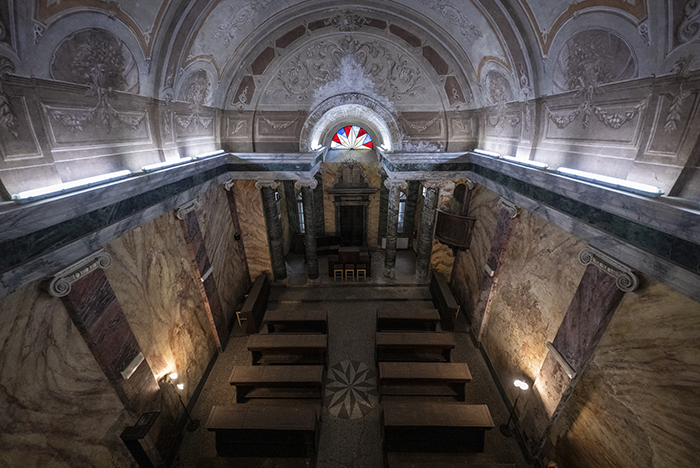
This street, one of the most distinctive in the historic centre, was home to the Jewish quarter for centuries. As a result, it still boasts a beautiful synagogue today. Furthermore, Samuel David Camillo Olivetti, the man who would change the city’s destiny, was born in one of the first houses on this street in August 1868.
The Church of Sant’Ulderico and the Town Square
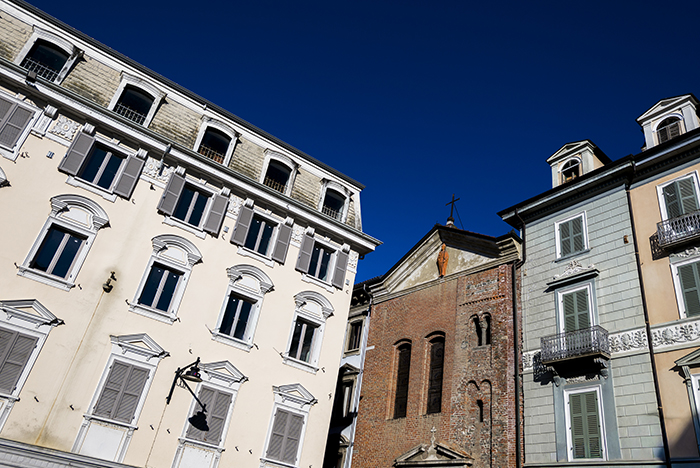
Over a thousand years ago, a Germanic bishop named Ulderico brought a child back to life in an inn in Ivrea. The child grew up, became a priest, and built a church on the site of the former inn. Over the centuries, the church has been filled with works of art, including the statue of the saint adorning the high-up façade.
Via Arduino
With its Roman layout, medieval heart and working-class spirit, this street has nurtured, in its very corners: the childhood of an industrialist, the genius of a designer, the name of an online platform – all with an international flavour. Now it feigns detachment from world events. But it has woven a wisteria into its hair and is perhaps preparing something new.
Gioberti Square
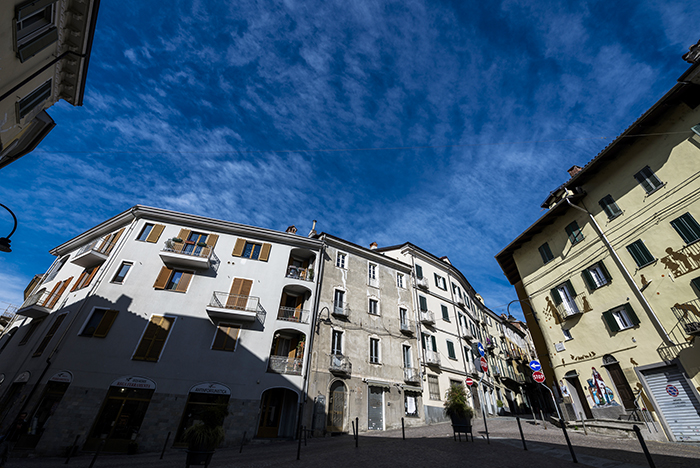
At the heart of the San Domenico district lies ‘Piazza Maretta’, as the people of Ivrea like to call it, a square that is both popular and unique. Rather than simply being visited, it invites you to understand, appreciate and experience its distinct atmosphere. Set on a slope, it remains firmly rooted in its traditions.
Borghetto
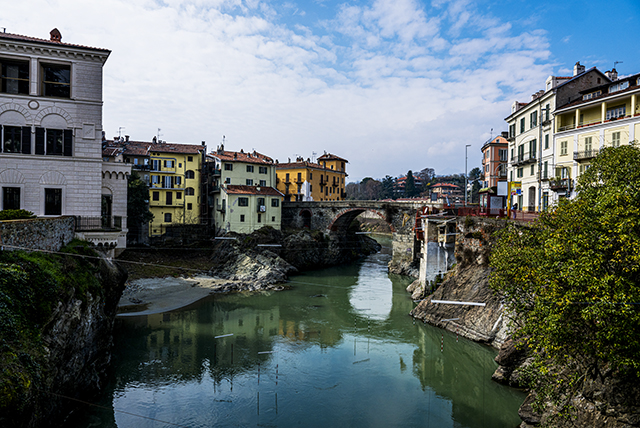
For centuries, the city has been nestled behind its imposing walls on the upper part of the hill, with only a few settlements nearby. The most notable of these is Borghetto, a small, fiercely independent settlement that shares only a connection with the Ponte Vecchio. The water, the rock, the houses and the history all come together to create the picture.
Dora Hotel
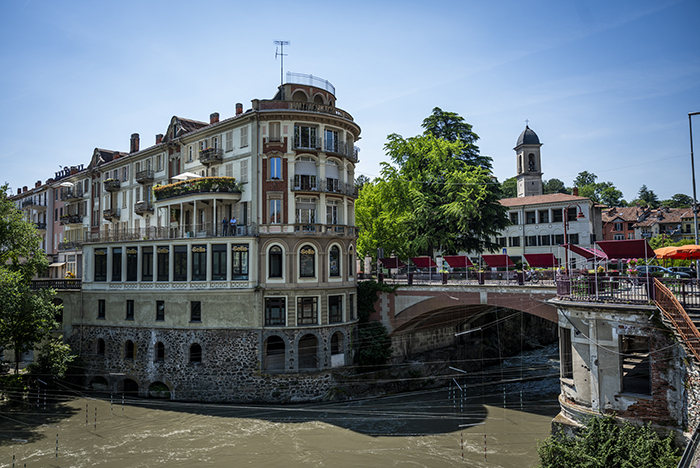
Originally a historic restaurant and later a hotel, during the Olivetti era it became the preferred gathering place and accommodation for the intellectuals and artists who gravitated around the company. As the poet Giovanni Giudici recalled: “The Dora / a humble and modest / dwelling – yet still the same – / whose doorstep, at this very hour, / is graced by successful men.”
Camillo Olivetti Fountain
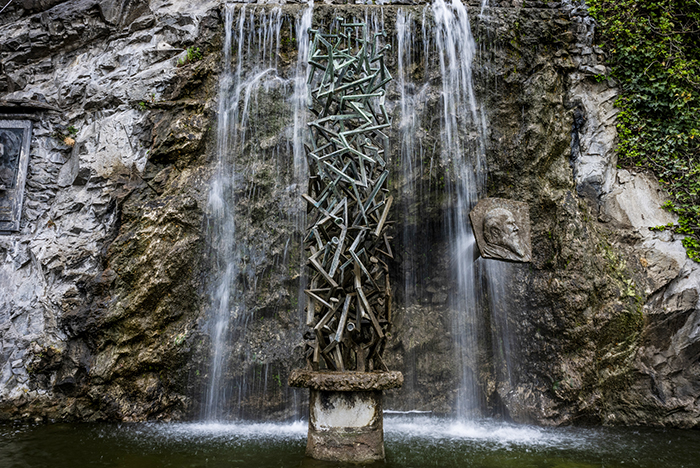
Not all monuments merely celebrate the past. This one, for example, conveys Camillo Olivetti’s anxiety about the future, transforming it into a sense of longing. His profile emerges from the ancient rock, gazing towards his red-brick factory beyond the river, representing the future.
Canoa Stadium
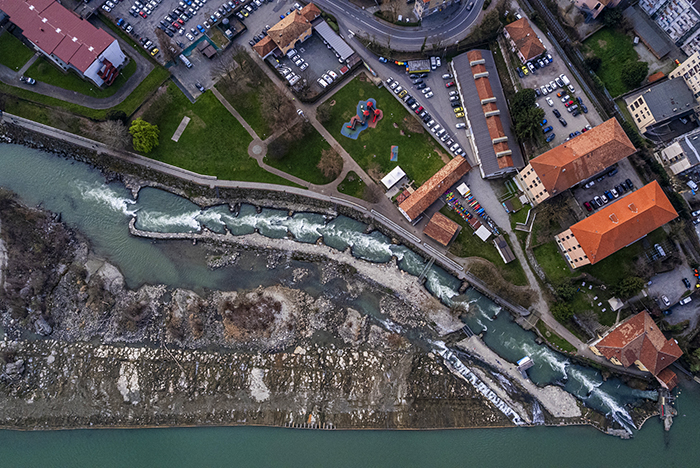
The Canoa Stadium is a source of pride for Ivrea, putting the town in the international spotlight thanks to the quality of its sports facilities and its absolutely unique town centre location. The ‘town of towers’ can also be admired in all its beauty from here.
Casa Stria
In Ivrea, it is also about listening to the passage of time. Here, time whispers of peace: the peace of the spirit, emanating from the former Convent of San Francesco, and the peace of arms, proclaimed by Casa Stria. On 2 May 1391, Amadeus VII, the nobles and the rebels of the Canavese ended the Tuchinaggio in this exquisitely decorated terracotta residence.
Pons Maior
It’s an ancient story that today seems like a fairy tale. Water made it possible; water wiped it out; water brought it back to light. For a city built on a river, it could not have been otherwise. The story recounts one of the greatest river ports of its time and a marvellous bridge that defied the treacherous Dora.
Santo Stefano Tower
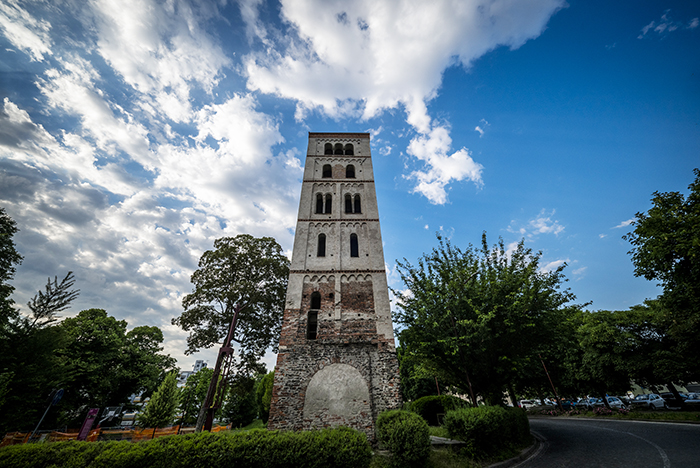
Towering over the River Dora, the Romanesque bell tower of the Abbey of Santo Stefano is all that remains of the thousand-year-old building. It has witnessed Benedictine splendour, neglect, an earthquake, French artillery and various adaptations for different uses. Today, it bears the marks of the centuries well and displays its restoration with justified pride.
East Residential Block – La Serra Hotel
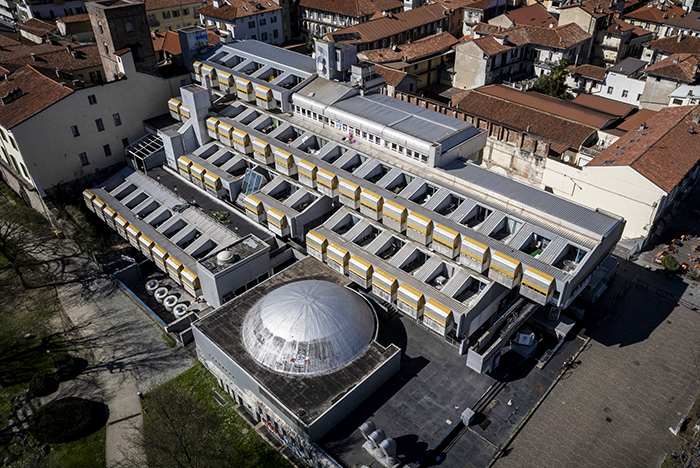
This is a bold venture by Olivetti into the ‘old’ part of Ivrea, combining residential blocks, sports centres and cultural centres in a design that is reminiscent of a ship. This giant ‘typewriter’, where people can live, learn, swim and read, is crying out for a new lease of life.
Roman amphitheatre
There are many traces of Eporedia, but this is the most impressive. From here, it is easy to imagine the building’s former magnificence against the backdrop of the city. It is more difficult to fathom the crowd’s taste for the blood that fills the arena. Up there is the ‘Sleeping Beauty’: perhaps she is not asleep, but has merely closed her eyes to avoid seeing.
“Natale Capellaro” footbridge
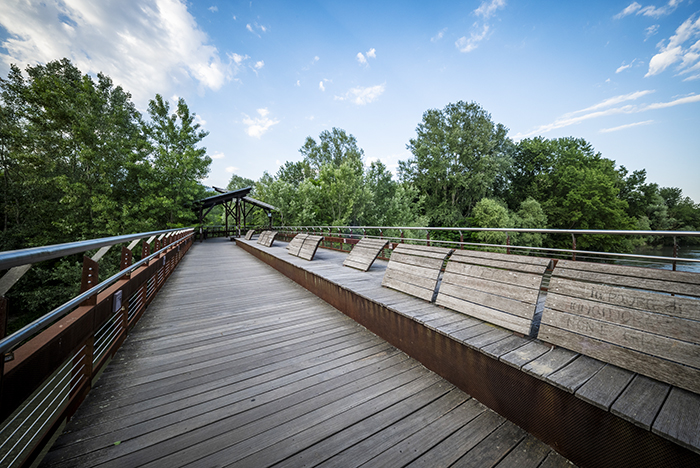
This remarkable structure, which has been admired since the last century, is more than just a footbridge: it is a place where you can pause and enjoy one of Ivrea’s most distinctive features – its setting. Situated on the banks of the Dora and at the point where the lines drawn by the mountains and the morainic amphitheatre converge, the town appears in all its grace.
Naviglio di Ivrea
The city’s deep and inextricable link with water is also evident in one of the region’s most significant hydraulic projects: the Ivrea Canal. Flowing for around 75 kilometres from Ivrea to Vercelli, it is one of the most significant legacies of the Middle Ages in the area. This waterway has been marginally linked to two illustrious figures in history: Leonardo da Vinci and Napoleon Bonaparte.