
Company Canteen and Recreation Club
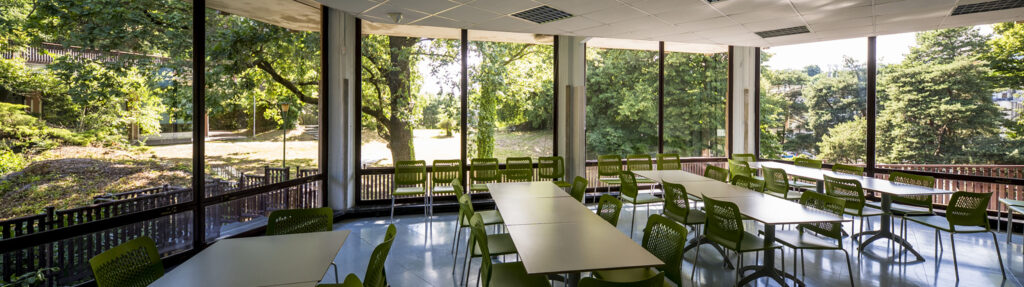
If the people who work are individuals, and every individual is both body and spirit, then the lunch break cannot simply be time to eat. Nor can the canteen be merely the place where that happens. Hence these remarkable spaces, open to nature, where people can eat, rest, read, play, talk, or simply enjoy a moment of silence. Productivity? It benefits too.
Heating Plant

The colors, the stained-glass windows, a certain feminine grace in a building whose purpose would otherwise be purely practical: instead, it becomes, also to the eye, one of the area’s vital centers. It is a heating plant that seems to say: there is another kind of energy, no less important than the one it produces, and that energy is beauty.
Castellamonte District
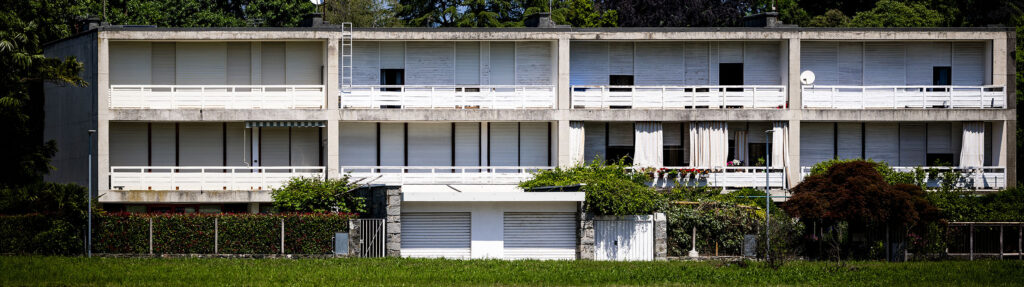
Homes for workers, homes for office employees, homes for managers, all within the same neighbourhood, rich in greenery and beauty. Here, Olivetti’s ideas reach back through history and speak quietly in our ear: “Would you like a little more social harmony? Then don’t divide the city by social class. Let their children play together. How? Start with the green spaces.”
Former Carpentry Workshop

A building dedicated to craftsmanship that was transformed in the 1950s. Since then, its adjustable sunshades have been reflected in the glass façades of the ICO Workshops, creating a play of reflections that brings the street to life. Architecture, after all, is a long, unending, and never truly finished meditation on light.
West Residential Unit “Talponia”
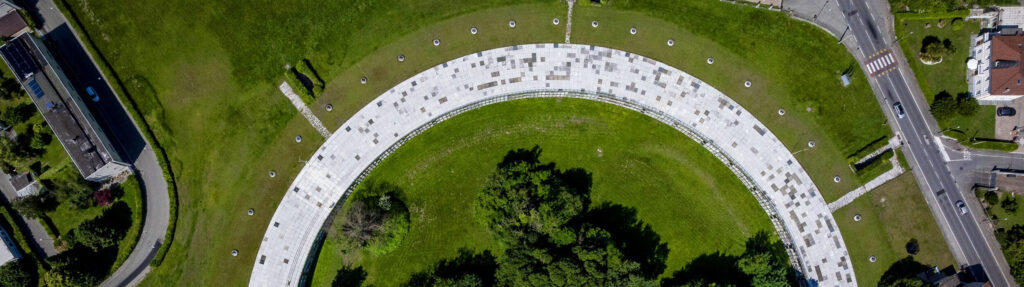
An architectural work that never fails to amaze. It embraces seeming contradictions: it is one of Ivrea’s defining landmarks, yet it speaks a universal language. Built largely underground, it is filled with light. Born from the bold imagination of its designers, it remains deeply rooted in the surrounding landscape.
UCCD Olivetti Houses

Olivetti’s Ivrea is also an archipelago of homes built by the Employee Housing Consultancy Office, led by the visionary architect Emilio Aventino Tarpino. More tradition or more imagination? As Ludovico Quaroni wrote, the Olivetti intellectuals were “committed to building a modern tradition.”
Camillo Olivetti
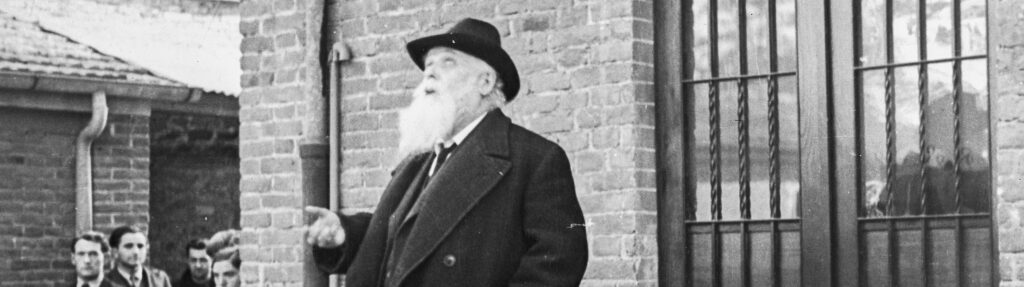
Samuel David Camillo Olivetti, born in Ivrea in 1868, founded Italy’s first typewriter factory and carried his family name across the oceans. An innovator, a pioneer, and a man who effortlessly reconciled two identities often seen as contradictory: that of an industrial entrepreneur and that of a committed socialist.
Olivetti Crèche
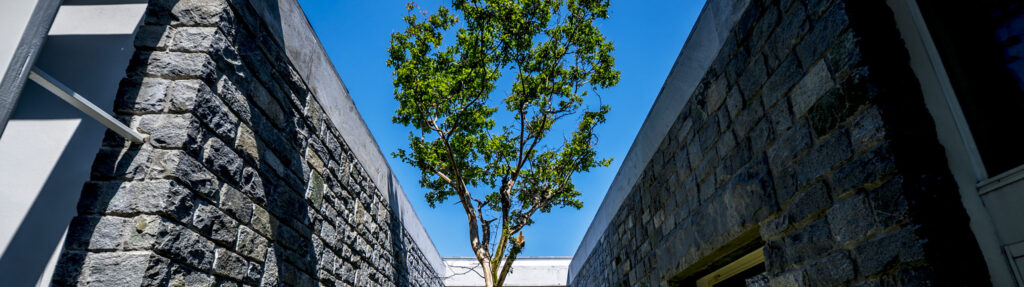
Among the wide range of services the company created for its employees and their children, the Olivetti Crèche stands out. The greatest ideas often seem simple once they have been expressed. Like this one: to build a community centred on people, you must first create places designed with children in mind. Places where they can grow, dream, and let their imagination flourish.
Red-Brick Factory
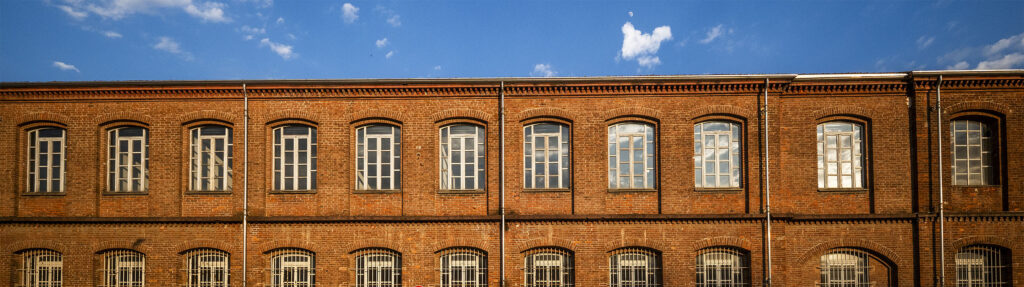
At the end of the nineteenth century, a young engineer named Camillo envisioned a factory in a meadow. He saw it in the sense that he imagined it. Then he built it, setting in motion, without ever foreseeing it, the most original industrial story of the century about to begin. Every flight begins with a nest. This one is made of red bricks.
Social Services Center
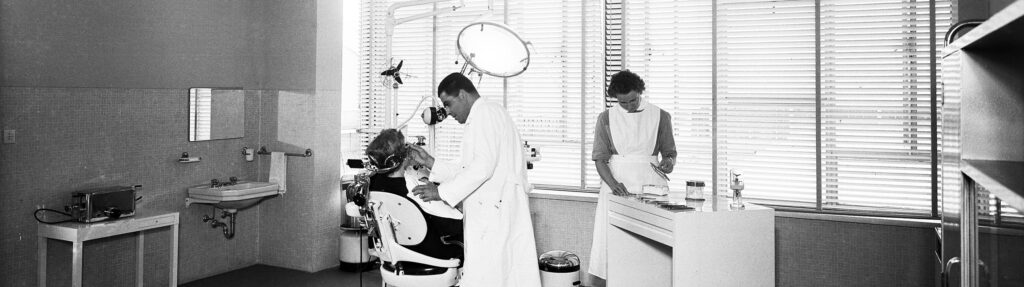
“The person who spends long days in the factory does not leave their humanity behind in their work overalls.” We are not defined solely by what we do, so believed Adriano Olivetti. That is why, among hexagonal columns, light wells, carefully selected plants, and colorful walls, this place dedicated to the care of workers resembles a temple.
Adriano Olivetti
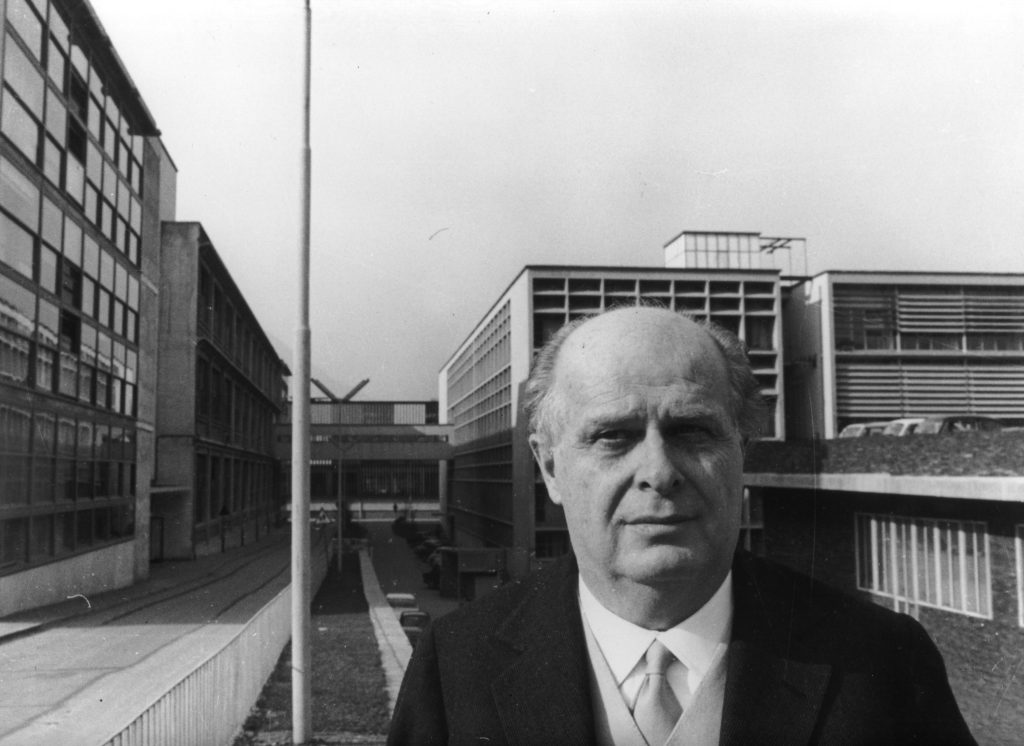
There are people who share a special relationship with the horizon, as though they possess an innate need to look beyond, across both space and time. Adriano Olivetti was one of them, not least in the way he understood his role as an industrialist, urban planner, publisher, and politician throughout the 1930s, 1940s, and 1950s. The back cover of one of his biographies poses the question: “Can one be both an entrepreneur and a revolutionary?” His life answers with a resounding yes.
Laboratory-Museum Tecnologic@mente
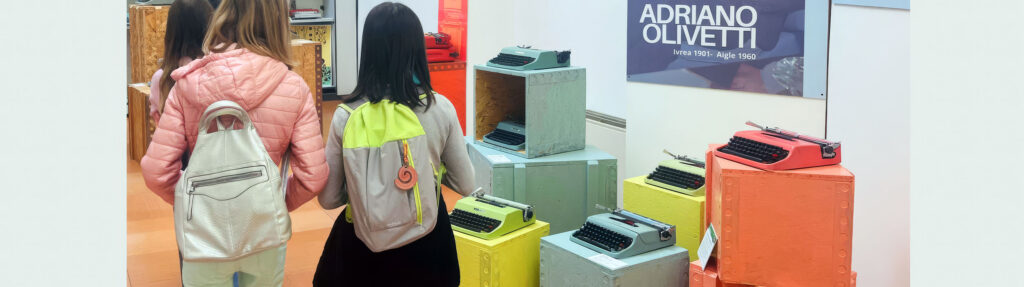
Two souls in one body: the Museum, with its collections of typewriters, mechanical and electronic calculators, and computers; and the Laboratory, with its educational programmes for Italian schools. All in the name of Natale Capellaro, the brilliant designer whose calculating machines helped make Olivetti a world leader.