
Canoe Stadium

The Canoe Stadium is one of Ivrea’s proudest achievements, placing the city in the international spotlight: both for the quality of the sporting facility itself, and for the fact that it sits right in the heart of the city — something entirely unique. From here, too, the “città turrita” can be admired in all its beauty.
“Natale Capellaro” Footbridge

This elegant structure, long dreamed of since the last century, is a footbridge where you do not simply pass through: you stop, and take in Ivrea at its most characteristic — its setting. Draped along the Dora, at the point where the lines of the mountains and the Anfiteatro Morenico converge, the city reveals itself in all its grace.
Giuseppe Giacosa Civic Theatre

A traditional Italian-style theatre that stands as one of the city’s proudest landmarks, it is the kind of place that invites you to lower your voice the moment you step inside. Named after Giuseppe Giacosa, the celebrated librettist of Giacomo Puccini, it also reflects his spirit: deeply rooted in its local heritage, yet with branches reaching out to the world.
Church of Saint Martha

Founded in the 15th century by the Confraternity of Saint Martha, the church later took on the elegant forms of the Baroque. Today, it is no longer a place of worship but a place of culture: an open space for the community, hosting exhibitions and conferences, and a landmark for the people of Ivrea, who move through it with the familiarity of being at home.
Church of San Nicola da Tolentino

The story of one of the finest examples of Baroque architecture in the Canavese region begins with a medieval friar from Cremona and an ancient confraternity of Ivrea devoted to a saint from the Marche. It also includes a miraculous event: in 1704, during the French siege of the city, a bomb pierced the church roof but failed to explode. A masterpiece of local art with a truly universal story.
Vincenzo Gioberti Square

The heart of the San Domenico district, known to every resident simply as “Piazza Maretta” (Maretta Square), this square is both distinctive and deeply rooted in local life. More than a place to visit, it is a place to understand, to discover and to experience. Its sloping layout has changed little over time, and neither have the traditions that continue to define it.
Church of Santa Croce

A confraternity won the people’s hearts during the tragedy of the plague, and the community helped it build this church. Everyone calls it the “gesia dle cadene”, the “Church of the Chains”, after the chains that mark its entrance, yet its interior is filled with Baroque grace. The theatrical paintings by Luca Rossetti of Orta bring together a sense of wonder and quiet contemplation.
Via Quattro Martiri and the Synagogue
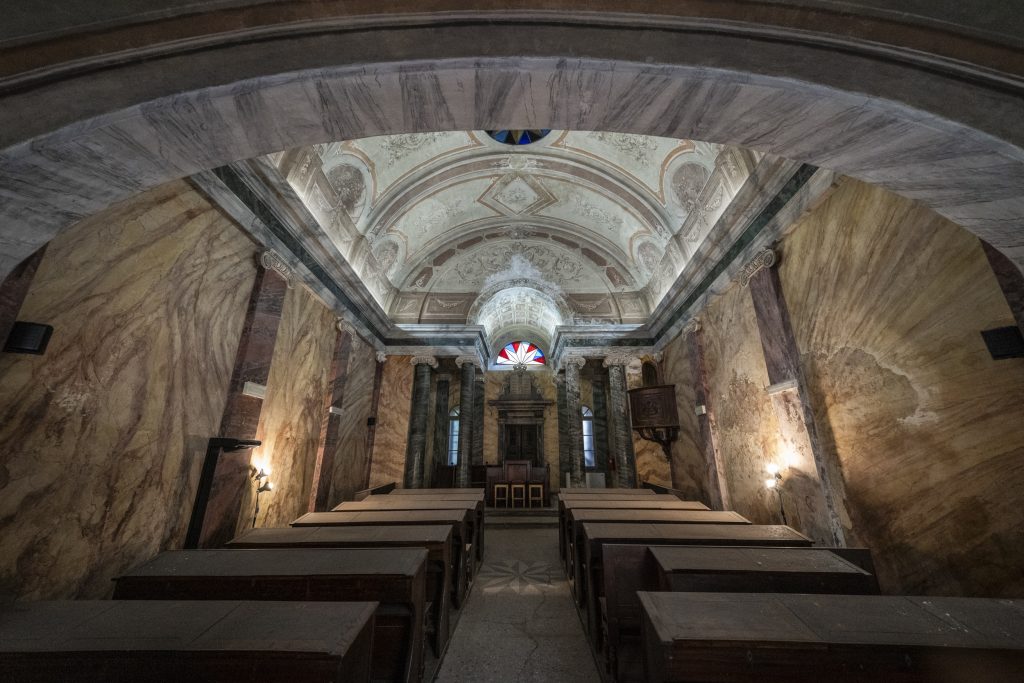
One of the most distinctive streets in Ivrea’s historic centre, Via Quattro Martiri was, for centuries, the city’s Jewish neighborhood. Its elegant synagogue still stands today as a testament to that heritage. At the beginning of the street, in August 1868, another chapter of Ivrea’s history began with the birth of a child destined to transform the city’s future: Samuel David Camillo Olivetti.
East Residential Complex – Hotel La Serra
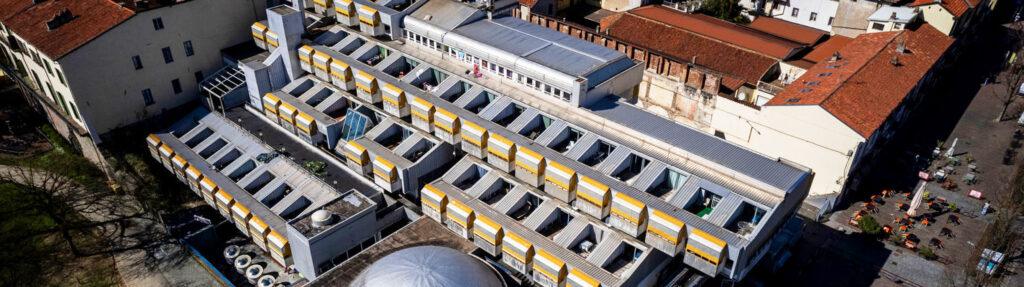
Here is one of the boldest incursions of Olivetti architecture, with its distinctly international character, into the “old” city of Ivrea: part residential complex, part sports centre, part cultural hub, and even, in some ways, part ship. This giant typewriter of a building, where people can live, learn, swim, and even read, is waiting to be brought back to life.
Camillo Olivetti Fountain
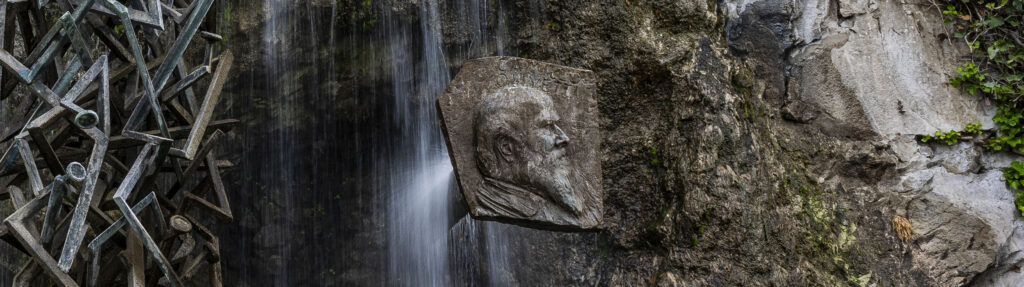
Not every monument is meant simply to celebrate the past. This one, for example, expresses Camillo Olivetti’s longing for the future and gives shape to that aspiration. His face emerges from the ancient rock, reaching out from the heart of the old town toward his red-brick Factory, a future lying beyond the river.
Castle Lane
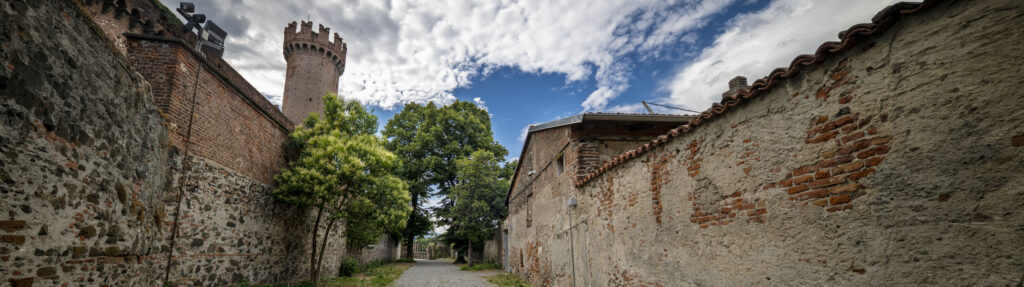
Almost a “fifth tower” of the castle, the new ramp climbs the medieval ramparts and reverses their meaning — from impregnable to inclusive. For the first time, to the north as well, the lower and upper parts of Ivrea are joined. Castle Lane opens a passage where none was previously imaginable, holding together history and horizon.
The Church of Sant’Ulderico and the Town Square
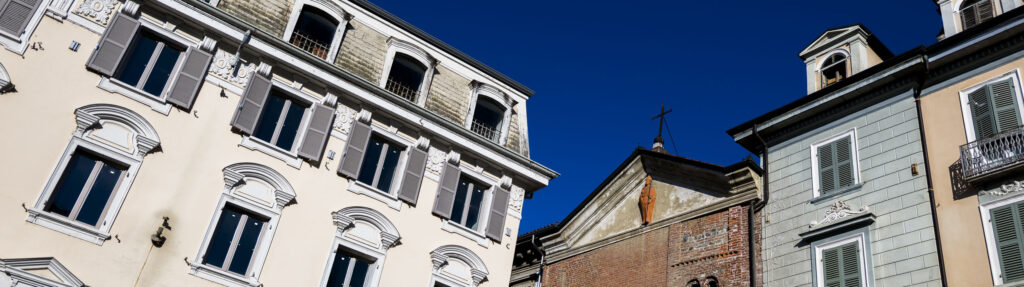
More than a thousand years ago, in an inn in Ivrea, a Germanic bishop named Ulderico raised a child from the dead. The child grew up, became a priest, and built a church on the site of the inn. Over the centuries it filled with art — including the statue dedicated to the Saint that graces the façade, high above.