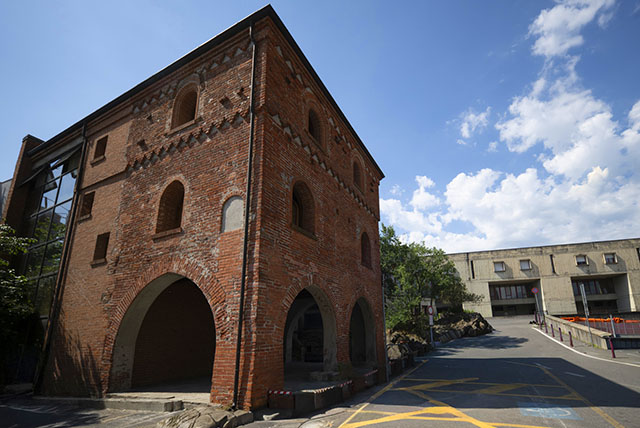
Palace of the Municipal Council

The institutional role

Listen to the audio story

The Palazzo della Credenza (Palace of the Municipal Council) stands in the upper part of Ivrea, next to what is today the city hospital. In the early fourteenth century, the surrounding area — Piazza Credenza — was the market square. The building dates to 1313 and served an important function: it was not the administrative seat of the municipality, but the meeting place of the Credendari. Who were they? They were councillors appointed by the General Council, which was itself composed of representatives of the city’s three districts: De Civitate, De Sancto Mauritio and De Burgo. The Credendari held legislative power, while executive power was entrusted to the Ordinati comunali. They worked alongside the Podestà — the head of municipal government and holder of judicial power — enjoyed considerable autonomy, could number no more than 70, and were appointed for life.

The institutional function of the building continued until the end of the seventeenth century. From the sixteenth century onwards, however, it was probably put to other uses. In 1681, the governing bodies obtained permission from Vittorio Amedeo II to move their meetings to the Casa Caffarelli, partly due to the deterioration of the building, which had been worsened by damage caused by the collapse of the nearby tower of Ivrea Castle, struck by lightning on 17 June 1676.

Medieval
A corner to discover

From an architectural standpoint, it is a typical Gothic construction in red brick, with a ground-floor portico of ogival arches and pointed arch windows on the upper floors. On the right side of the building, facing the square, there were once dark, sombre arcades that were nevertheless very useful on market days: all that remains of these is the Porte Toupe — the low, dark passage at the end of Via Marsala (known in the Middle Ages as Rua delle Ova).

In the nineteenth century the area underwent urban renewal: dilapidated buildings were demolished and the current square took shape, connected to Porta Aosta. Today the Palazzo della Credenza (Palace of the Municipal Council) finds itself in a completely different context, dominated by the present-day hospital, but it remains one of the most distinguished medieval monuments in the city and a precious testimony to its institutional history.