

This splendid building showcases the finest features of Piedmontese Baroque. About ten years later, the sacristy with the upper choir was added. The elegant bell tower, characterised by four refined balconies, was built from 1742 onwards. The magnificent polychrome altar dates back to 1764; through a grille, it offers a glimpse of the imprint left in the rock by the saint’s body.
The church was designed by the Savoy engineer Luigi Andrea Guibert, whilst the architect Bernardo Antonio Vittone appears to have been involved in a second phase of the work. The façade is divided into three storeys and adorned with pilasters, shell-motif niches and curved cornices. The coat of arms of the city of Ivrea is displayed on the tympanum.
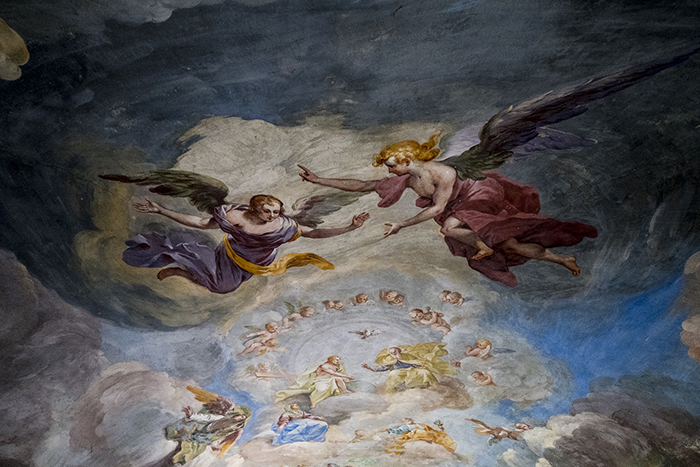
The interior is sumptuous and spectacular. It features elegant use of perspective and trompe l’oeil effects, typical of the Baroque style. Particularly striking is the opening in the chancel wall, through which the vault of the upper choir appears to be very far away, and on which is a magnificent depiction of Paradise.
The standout feature of the church is undoubtedly the frescoes, painted by Luca Rossetti da Orta between 1738 and 1739. Luca Rossetti created other magnificent works in Ivrea, in the church of the Holy Cross and in the Bishop’s Palace. Among the many scenes from the life and miracles of Saint Gaudentius, the Glory of the Saint in the apse stands out for its grandeur and beauty. Of particular interest are some detailed landscapes in which the city of Ivrea, with its castle, is clearly recognisable.